
Cak Imin Encourages Pesantren-Based Vocational Schools to Elevate Standards to International Levels
-
News
-
5 hours ago
This article was translated by AI. Read the original article on Kompas.com. See Original
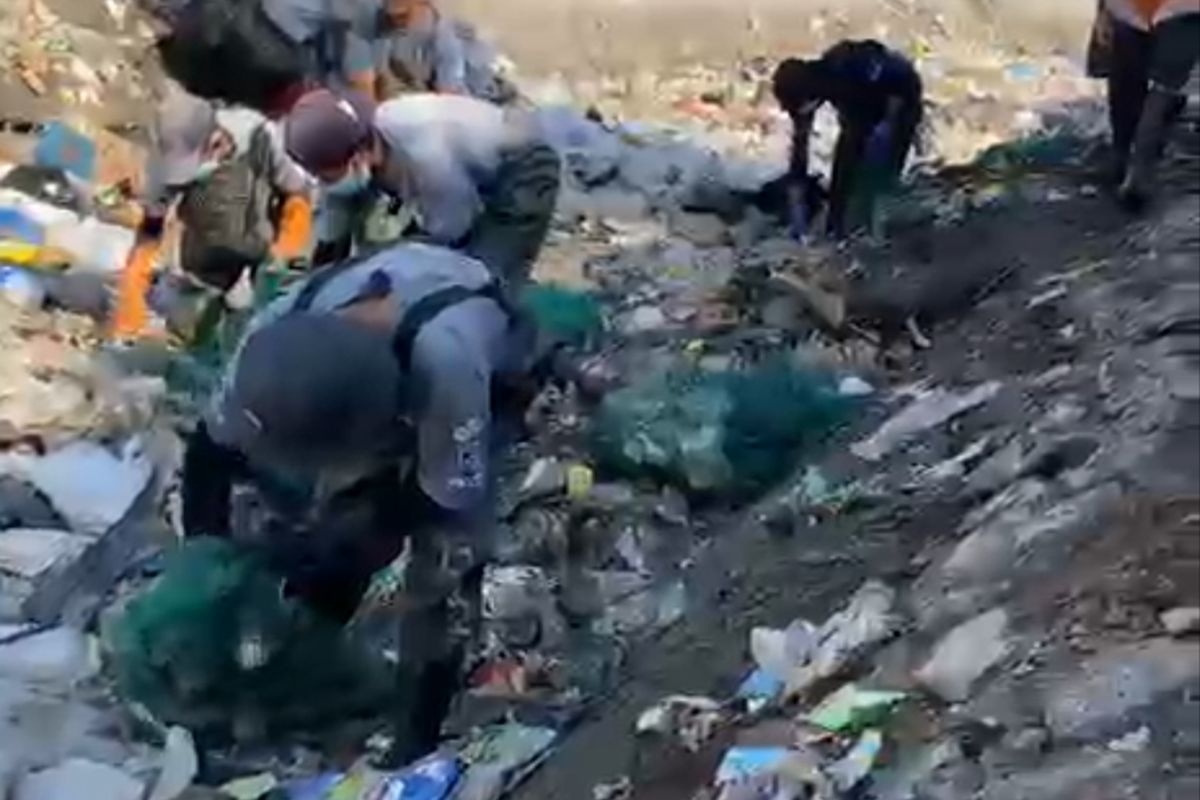
BANYUWANGI, KOMPAS.com - A stretch of river over 200 meters long in Dusun Kalimati, Kedungrejo Village, Muncar Subdistrict, Banyuwangi, East Java, has gone viral on social media due to being clogged with garbage.
The video was first uploaded by Sungai Watch, showing heaps of trash covering the river flow, which has the potential to reach the ocean where local residents rely on for their livelihoods.
When confirmed, Banyuwangi Area Manager of Sungai Watch, Suhardiyanto, said that the trash in the river is difficult to clean up because it has become contaminated with industrial waste.
This condition makes some household plastic waste, which would still have economic value, no longer easy to collect and sort.
"If there was no industrial waste, it would still be possible. Many still have value—in other words, used drink bottles can still be picked up. But because they are contaminated with factory waste, no one wants to collect them," Suhardiyanto said on Saturday (9/19/2026).
So far, locals have been hesitant to enter the river directly for cleaning because contact with the water can cause skin itching.
Furthermore, the odor is very pungent. For this reason, cleaning requires special equipment.
The Sungai Watch team uses personal protective equipment (PPE), such as waders, gloves, and masks when conducting cleanup at the site.
Suhardiyanto explained that Sungai Watch had actually tried to handle the trash at this location in 2023 by installing nets.
For about three months, the nets were collected daily to haul away trapped trash.
On average, approximately 70 kilograms of waste were collected each day, sometimes exceeding 100 kilograms.
However, the effort was eventually discontinued because the removed trash caused new problems at the sorting facility.
The waste from Muncar was brought to Sungai Watch's warehouse in Rogojampi. The smell made it difficult to sort trash inside the warehouse, located near residential areas.
When the trash was dried outside, nearby residents also complained about the odor.
"So in the end, we couldn’t provide a solution, and we took back the nets," said Suhardiyanto.
Currently, cleanup efforts have resumed with the involvement of volunteers and various parties.
In the latest operation, Sungai Watch recorded that 7,543 kilograms of trash were removed from the site.
However, that amount is estimated to be only about 25 percent of the total pile of garbage still remaining in the river flow.
Suhardiyanto said this problem requires upstream management as well as household waste handling to prevent the piles from growing.
"There’s still a lot. We managed to haul 7,543 kilos previously," he said.
Regarding the waste, Suhardiyanto stated that local government needs to take a role in regulating waste management in the area.
He suggested that any waste discharged into the environment should first go through a Wastewater Treatment Plant (IPAL) and adequate filtration systems.
"Ideally, factory waste must go through an IPAL. They need filters. If they want to dispose of waste, it should be through the IPAL so that the released water is clean and safe," Suhardiyanto said.
He also believes the government should encourage residents to improve household waste management and reduce plastic use.
"The government itself should also be involved in enforcing proper waste management," he emphasized.