

Cak Imin Encourages Pesantren-Based Vocational Schools to Elevate Standards to International Levels
-
News
-
2 hours ago
This article was translated by AI. Read the original article on Kompas.com. See Original
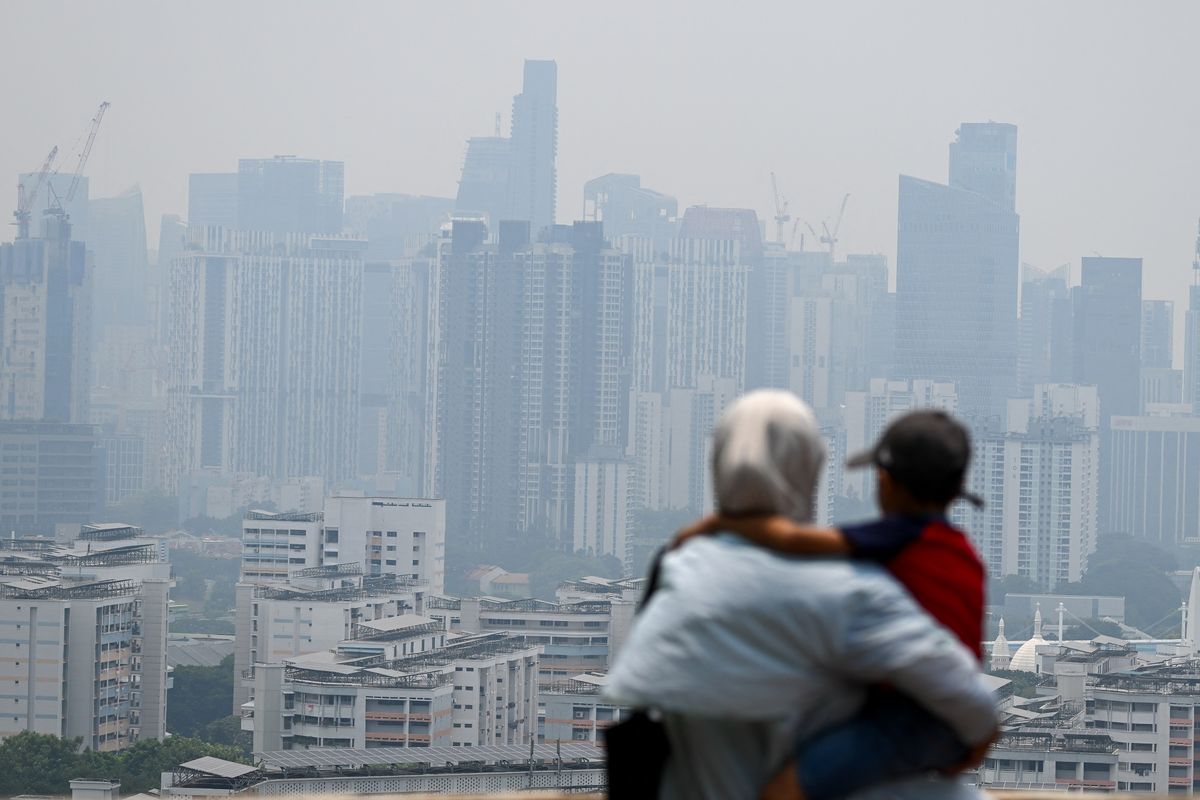
KOMPAS.com – Smoke haze from forest and land fires in Indonesia has engulfed Singapore, causing the air quality across the city-state to reach unhealthy levels.
This marks the worst condition since September 2019 and increases the risk of transboundary haze pollution in Southeast Asia.
According to reports from NDTV and Bloomberg, Singapore’s National Environment Agency announced that five regions across the country recorded unhealthy air quality on Tuesday, September 15, 2026.
This is the first occurrence since September 2019. IQAir data also ranked Singapore among the 10 cities with the highest air pollution worldwide at that time.
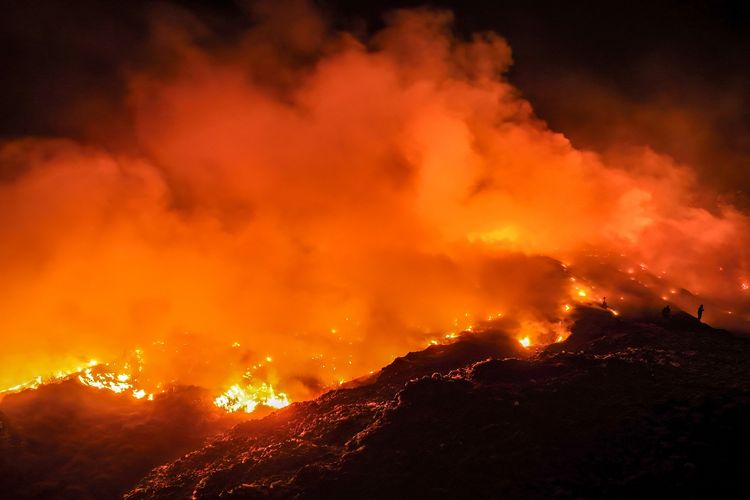 Forest and land fire flames in Rasau Jaya, Kubu Raya, West Kalimantan, Indonesia, August 6, 2026.
The haze situation is linked to increased fire hotspots in Indonesia during the dry season. Data from the Ministry of Forestry’s SiPongi fire-monitoring platform recorded over 9,000 fire hotspots throughout August 2026.
This is the highest number for the month of August since record-keeping began in 2015. Furthermore, over 7,000 fire hotspots have been recorded as of September 2026.
The fires are primarily concentrated in several areas of Sumatra and Kalimantan. On Tuesday, September 15, 2026, air quality in some of these regions was categorized as hazardous to very unhealthy based on Indonesian government data.
Indonesia’s Ministry of Forestry stated that this year’s fire increase is influenced by a combination of dry weather caused by El Nino and human-induced fires. Each fire incident requires individual investigation.
The haze reaching Singapore originates partly from fires in Kalimantan and Sumatra. Changing wind directions have carried smoke from Kalimantan toward Singapore, where it mixed with smoke coming from Sumatra.
Singapore’s National Environment Agency estimated that the haze conditions could persist for 24 hours after the report, with air quality ranging from moderate to somewhat unhealthy.
The ASEAN Specialised Meteorological Centre predicts dry conditions will continue across much of southern Southeast Asia in the near future. Hotspot activity and haze levels are also expected to rise, maintaining the risk of transboundary haze pollution.
The intensifying El Nino weather pattern increases the risk of fires by causing drier conditions in various regions.
Senior meteorologist at Atmospheric G2, Takahisa Nishikawa, forecasts that parts of Sumatra and Kalimantan may experience slight increases in rainfall the following week. While such rain could temporarily reduce fire risks, it does not indicate widespread or sustained wet conditions.
Current El Nino has a 75 percent chance of becoming a historic event that surpasses records back to 1950, according to the United States Climate Prediction Center.
Haze from Indonesian fires has not only affected Singapore but also Malaysia, which experienced thick haze at the end of August 2026.
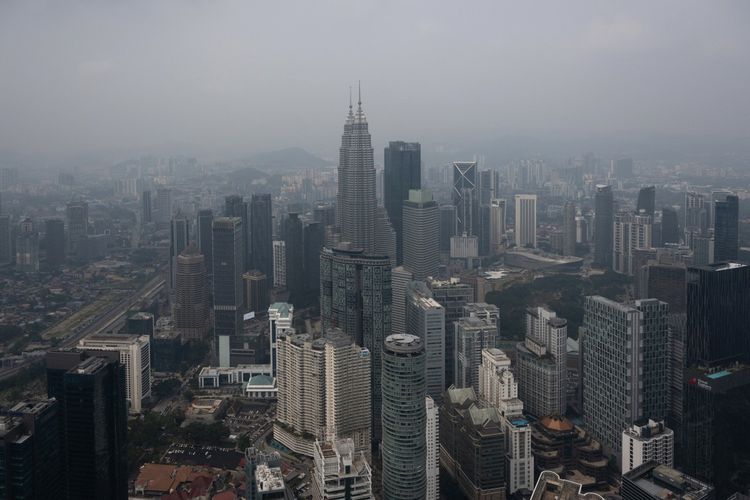 Petronas Twin Towers shrouded in haze in Kuala Lumpur, Malaysia, on August 11, 2026. Malaysian authorities issued warnings about high air pollution levels due to forest fires in Indonesia.
The conditions led the Malaysian government to move the annual National Day speech indoors. A state of emergency was briefly declared in parts of Sarawak in early September.
Malaysia subsequently offered assistance to Indonesia to help tackle the forest and land fires.