
Cak Imin Encourages Pesantren-Based Vocational Schools to Elevate Standards to International Levels
-
News
-
3 hours ago
This article was translated by AI. Read the original article on Kompas.com. See Original
JAKARTA, KOMPAS.com - Calls for the Indonesian House of Representatives (DPR) to release the draft of the Asset Forfeiture Bill to the public continue to grow.
A Civil Society and Anti-Corruption Coalition has urged the DPR to disclose the latest draft of the Asset Forfeiture Bill, which is targeted for passage in December 2026.
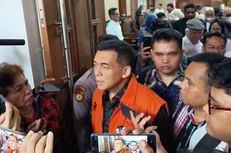
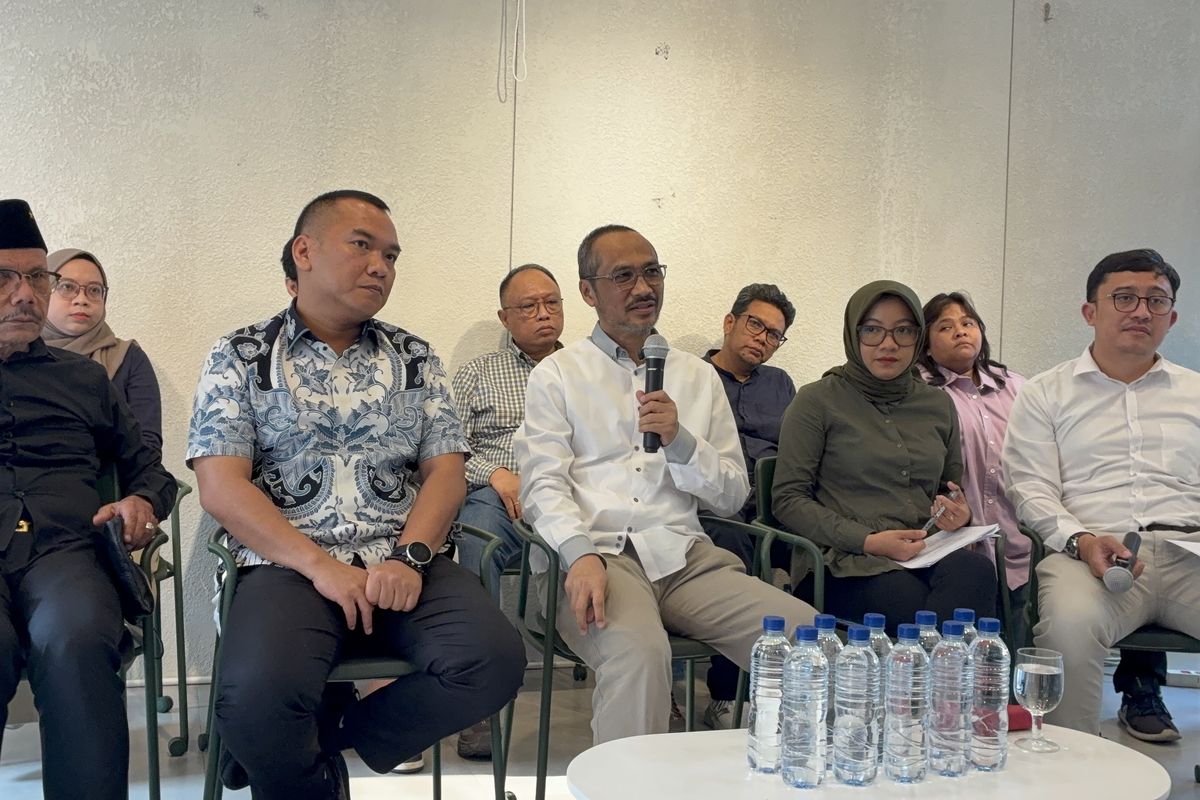
Lakso Anindito, Chairman of the IM57 Institute and representative of the coalition, said releasing the draft is necessary to uphold transparency and accountability principles in the lawmaking process.
“This is a form of fulfilling the principles of transparency and accountability, considering the public has previously possessed and compiled points regarding the draft Asset Forfeiture Bill for comparison,” Lakso said at a press conference at the Indonesia Corruption Watch (ICW) office in Jakarta on Friday (18/9/2026).
According to Lakso, openness is also important so that the public can understand the substance of the bill currently being discussed by the DPR.
Alongside this, the coalition is requesting the DPR to maintain several key provisions deemed important in the bill.
Lakso stated the coalition urges the DPR to include two types of asset forfeiture in the legislation.
First, forfeiture of unexplained wealth through a non-criminal conventional process.
This mechanism aims to enable the state to effectively reach wealth whose origins cannot be explained.
Second, forfeiture of illicit enrichment, also through a non-criminal conventional route, without solely depending on proving the predicate crime.
The coalition also requests that the authority to file asset forfeiture requests not be limited to the Attorney General's Office.
“Furthermore, the authority to submit asset forfeiture requests should not only be granted to the Attorney General but also to the Corruption Eradication Commission (KPK), with the main authority vested in the KPK,” Lakso said.
Besides these provisions, the coalition calls on the DPR to strengthen the system of checks and balances at every stage of the asset forfeiture process.
This step is considered necessary to prevent abuse of power in implementing this law.
“Moreover, safeguards including the threshold for the bill’s implementation are needed to ensure that the Asset Forfeiture Bill is not misused as a tool for criminalizing the public,” he added.
Lakso emphasized that improvements in law enforcement institutions are also required to prevent misuse of authority when the law is enforced.
“And to stress that the bill’s passage should not be rushed just to meet deadlines if it sacrifices the quality of content and the effectiveness of corruption eradication in Indonesia,” he said.
ICW has also previously demanded the DPR to open the bill draft to the public.
ICW’s Head of Legal and Investigation Division, Wana Alamsyah, requested the DPR to release the draft after the draft bill, academic manuscript, and inventory list of issues (DIM) have been completed.
“The DPR must release the draft, of course, after the draft bill, academic manuscript, and DIM have been finalized,” Wana told Kompas.com on Wednesday (2/9/2026).
Wana argued that the DPR’s concern over potential misinterpretation is unjustified.
According to him, transparency is essential so the public can grasp the bill’s substance being developed.
“If the draft remains closed, confusion will arise among the public and only blur the content of the Asset Forfeiture Bill under DPR’s development,” he said.
He also reminded the DPR to ensure the bill drafting process follows meaningful participation principles.
“Let’s not have the drafting process be as closed as other bills,” he added.
Similar demands came from the Aliansi Masyarakat Pati Bersatu (AMPB) and the Central Java Committee for the Investigation and Eradication of Corruption, Collusion, and Nepotism (KP2KKN).
AMPB Coordinator Teguh Istiyanto requested that the bill draft be widely distributed so the public can study and provide input on the material before it’s enacted.
“Please distribute the draft bill so everyone can read it, study it, give corrections, so that by the time it is ratified, it is already a mature piece of legislation,” Teguh said in an official statement to Kompas.com on Sunday (30/8/2026).
Meanwhile, KP2KKN Central Java Secretary Ronny Maryanto asked the DPR to release the draft and also provide a space for public consultation.
“The DPR must be transparent about what this Asset Forfeiture Bill draft contains and open up a space for public consultations to gather input regarding its substance,” Ronny said when confirmed on Saturday (29/8/2026).
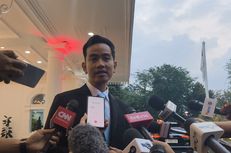
On the other hand, DPR Deputy Speaker Cucun Ahmad Syamsurijal explained why the draft has not yet been published.
Cucun said the DPR is still in the process of refining the initial draft.
He explained the draft cannot yet be released publicly because it has not gone through the drafting team and synchronization team stages.
“The refinement process including the draft team and synchronization team stages haven’t been completed yet. It would be dangerous if it’s revealed before then, as it would lead to misinterpretation,” Cucun said at the DPR building on Tuesday (1/9/2026).
Cucun added that the bill still needs to go through DIM discussions.
“Yes, the DIM and academic manuscript are for this new legislation,” he said.
He noted that the DPR is also considering the various versions of the draft that have been circulated.
He worries that the public might interpret the bill’s content based on documents that are not final.
“No, that would only cause misinterpretations; multiple drafts are already circulating,” Cucun said briefly.
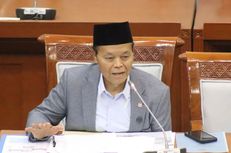
Meanwhile, DPR Commission III Chairman Habiburokhman has previously outlined several contents of the ongoing Asset Forfeiture Bill draft under DPR review.
He presented these developments at a plenary meeting at the DPR building in Senayan, Jakarta, on Thursday (27/8/2026).
“This is still a draft,” Habiburokhman said.
He explained there are several types of assets that can be forfeited according to the draft under discussion.
“The first is assets that are the proceeds of a crime. Second, assets that serve as tools or means to commit a crime,” Habiburokhman said.
In addition, assets found as part of criminal acts can also be confiscated by the state.
Habiburokhman said the DPR is also discussing two methods of asset forfeiture: those based on court decisions and those without court decisions.
“Asset forfeiture based on criminal convictions against perpetrators, theoretically called in persona. Asset forfeiture without criminal convictions, or in rem. So we will combine these two concepts,” Habiburokhman said.
He said the bill’s drafting also considers balancing law enforcement interests with constitutional protections of citizens’ property rights.
“Article 1 paragraph 3 guarantees the supremacy of law, Article 1 paragraph 3 of the 1945 Constitution, Article 28D paragraph 1 ensures just legal certainty and equality before the law, Article 28G paragraph 1 protects personal, family, honor, and other rights,” Habiburokhman elaborated.
Habiburokhman said Commission III is committed to producing an equitable asset forfeiture policy to carefully restore state losses.
The bill’s deliberation process is expected to continue until December 2026.
“Then harmonization, DIM discussion via drafting and synchronization teams, first-level decisions, and second-level or plenary decisions scheduled by December 2026,” he said.