

Assessing the High Logistics Costs of the Archipelago
-
News
-
24 minutes ago
This article was translated by AI. Read the original article on Kompas.com. See Original
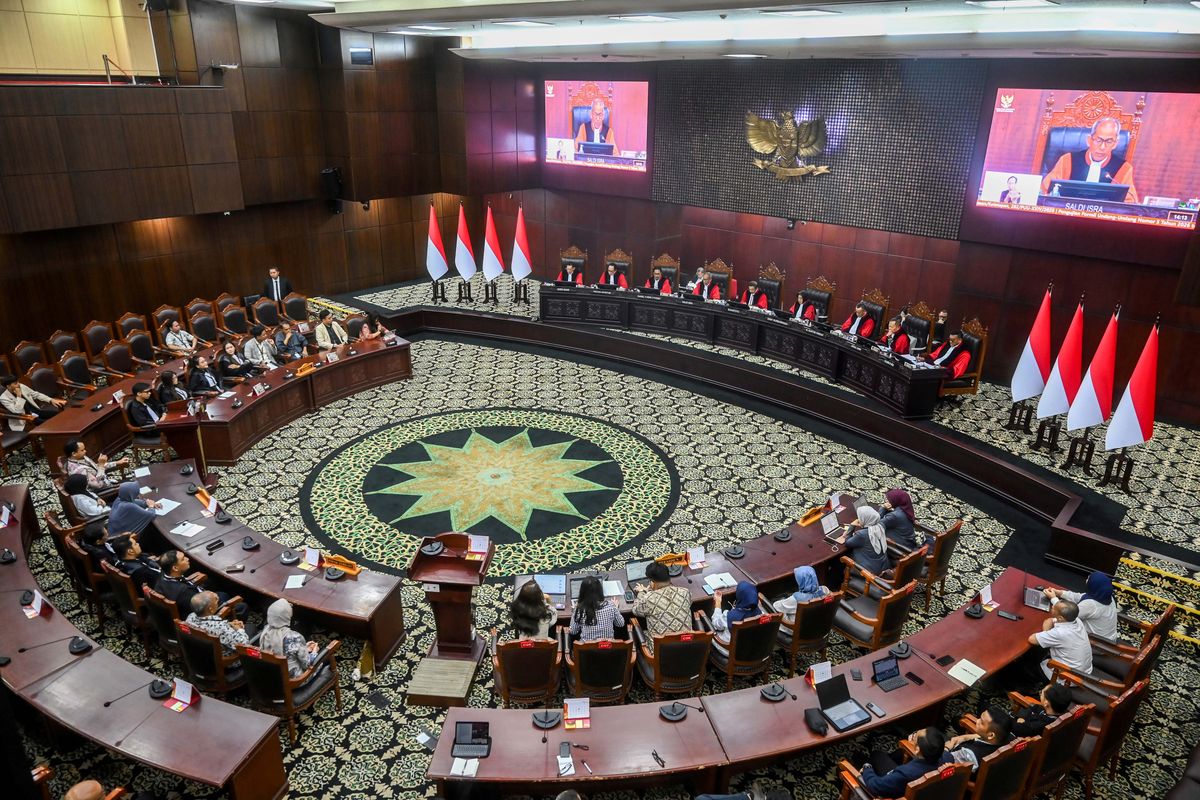
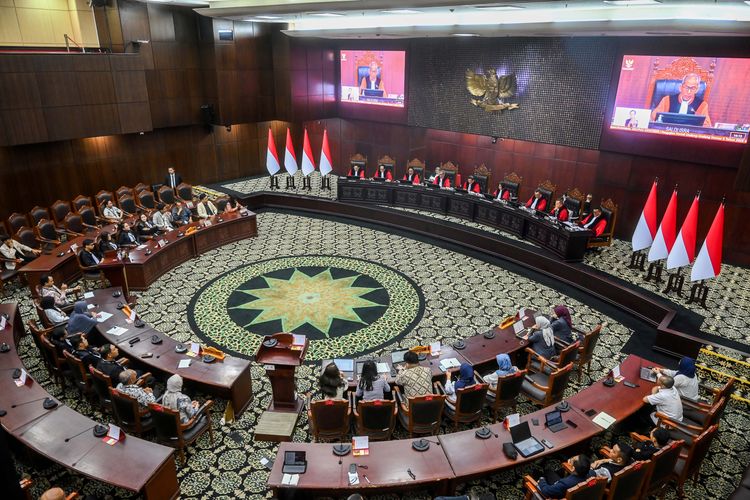
JAKARTA, KOMPAS.com - Spokesperson and Constitutional Court (MK) Judge Enny Nurbaningsih explained why the MK will hold hearings on the 2024 presidential election dispute filed in 2026.
The dispute concerns the nomination requirements for Vice President candidate Gibran Rakabuming Raka with case number 01/PHPU.PRES-XXIV/2026, submitted by Denny Indrayana and others.
Enny stated that as a judicial institution, the MK is prohibited from rejecting a case that has been filed before it undergoes examination and trial.
"In accordance with one of the principles that a court is forbidden from rejecting a case, the MK must accept every case submitted by applicants for hearings," said Spokesperson and MK Judge Enny Nurbaningsih, as reported by Tribunnews on Friday (09/11/2026).
Enny added that the MK's stance on this presidential election dispute petition will proceed through a preliminary hearing process and will then be decided in a Judges' Deliberation Meeting (RPH).
"The MK's position regarding cases entering after the preliminary hearing will be decided at the RPH, according to procedural law," she said.
Based on Constitutional Court Regulation (PMK) Number 1 of 2026 issued on September 16, 2026, the MK will hold the first hearing on Monday (09/21/2026).
Zainal Arifin Mochtar, a Professor of Constitutional Law at Gadjah Mada University (UGM), views the MK's issuance of the PMK and reopening of PHPU hearings as a form of caution.
This is because the MK is bound by Law Number 48 of 2009 concerning Judicial Power, which prohibits courts from refusing to examine, try, and decide cases brought before them.
"I think the MK is merely exercising caution, as it is impossible for them to hold hearings without any due process. Holding hearings on this case does not necessarily mean it will proceed," he said.
Commonly known as Uceng, he said the MK could hold the hearing to issue a ruling that presidential disputes must be based on the Election Law, which requires case submission within a maximum of three days after the General Elections Commission (KPU) announces the winner.
Such rejection can only be expressed through the trial itself, not by dismissing the case before the trial begins.
"Holding the hearing might also reaffirm the strict three-day rule," he added.
Alternatively, the MK could reaffirm that only candidates participating in the presidential election are entitled to file disputes—not Denny Indrayana.
But what is certain according to Uceng, is that the MK is currently upholding Article 10 of the Judicial Power Law, which prohibits judicial institutions from rejecting cases before trial.
"At the very least, through this, the MK confirms Article 10 of judicial power that forbids courts from dismissing cases presented before them," he said.
Uceng also explained that the consequence of the new PMK is that the MK must provide the same service to PHPU disputes whenever such disputes are filed.
"The implication is that the MK must treat all future petitions equally, that is the consequence," he added.

























