

Cak Imin Encourages Pesantren-Based Vocational Schools to Elevate Standards to International Levels
-
News
-
2 hours ago
This article was translated by AI. Read the original article on Kompas.com. See Original
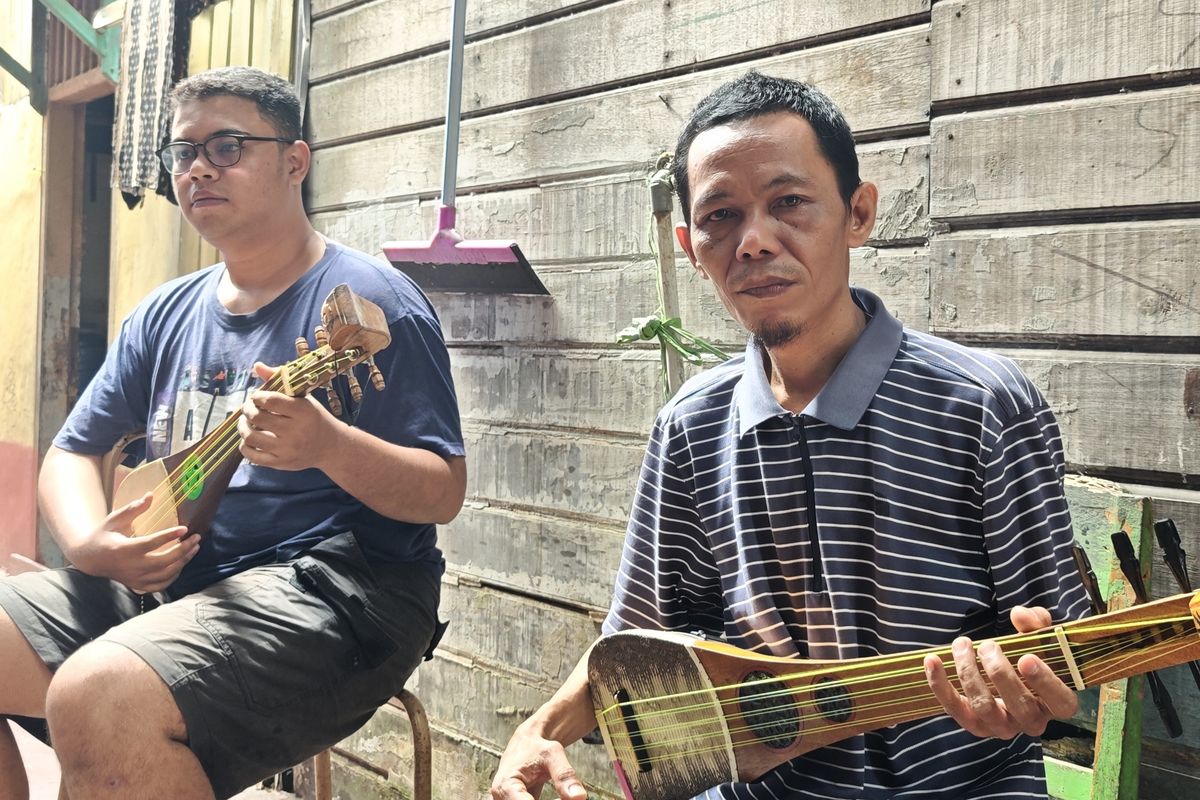
KUKAR, KOMPAS.com - Tucked away in an alley on Jalan Teratai, Loa Ipuh Village, Tenggarong District, Kutai Kartanegara, East Kalimantan, stands a wooden house amid local residences.
This house is where Sarifudin spends most of his time.
Locals know the man, born in 1976, as Katal, or sometimes Busu Katal. In the Kutai language, "busu" means uncle.
But for those familiar with Kutai’s traditional arts, Busu Katal’s home is more than just a residence.
It is where wood is meticulously crafted into gambus instruments.
To Busu Katal, the gambus is not merely a musical instrument that produces sound. It has a specific shape, size, technique, and distinct characteristics that he believes must be preserved for an instrument to truly be called a Kutai gambus.
"For me, it’s because of my love for the gambus," Busu Katal said during an interview at his home on Sunday (20/9/2026).
That affection is what has kept him creating gambus instruments to this day.
He said he began learning to make gambus around 2018. Before that, he mostly worked as a carpenter.
When carpentry work slowed down, Busu Katal chose to pursue something he found more meaningful and closer to his passion for the gambus.
He learned directly from his father, who was also a gambus maker.
"Because I was with him every day, consulting with my father," he explained.
From his father, he didn’t just learn how to make the instrument but also gained knowledge about the particular form of the Kutai gambus, which carries its unique identity.
For Busu Katal, the issue of shape is no trivial matter.
He observes that nowadays, more people make gambus, but not all understand the traditional shape that distinguishes the Kutai gambus.
"In the past, there were specific sizes and forms as references when making gambus. That’s what gave my father’s gambus its character, which I am trying to preserve," he said.
"Actually, the Kutai gambus has specific measurements. If you want a certain number of strings, the size must correspond," he added.
Yet, he noted, things have changed today.
"Nowadays, there are no sizes used. Once it’s made, it’s called a Kutai gambus," he continued.
It is this concern that motivates Busu Katal to do more than merely produce gambus to fill orders.
He feels a responsibility to maintain the traditional shape handed down to him.
"I love this gambus. That’s why I continue it, so that the essence of what makes this gambus won’t be lost," he said.
Making a gambus is not a task to be rushed.
Busu Katal says crafting one gambus typically takes about a week to complete.
The time can be shorter if using certain types of wood.
"For me, it takes one week to finish. But if the wood is soft like pulai wood, it can take three to four days," he said.
On the other hand, using jackfruit wood generally requires about a week for each gambus.