

Cak Imin Encourages Pesantren-Based Vocational Schools to Elevate Standards to International Levels
-
News
-
58 minutes ago
This article was translated by AI. Read the original article on Kompas.com. See Original
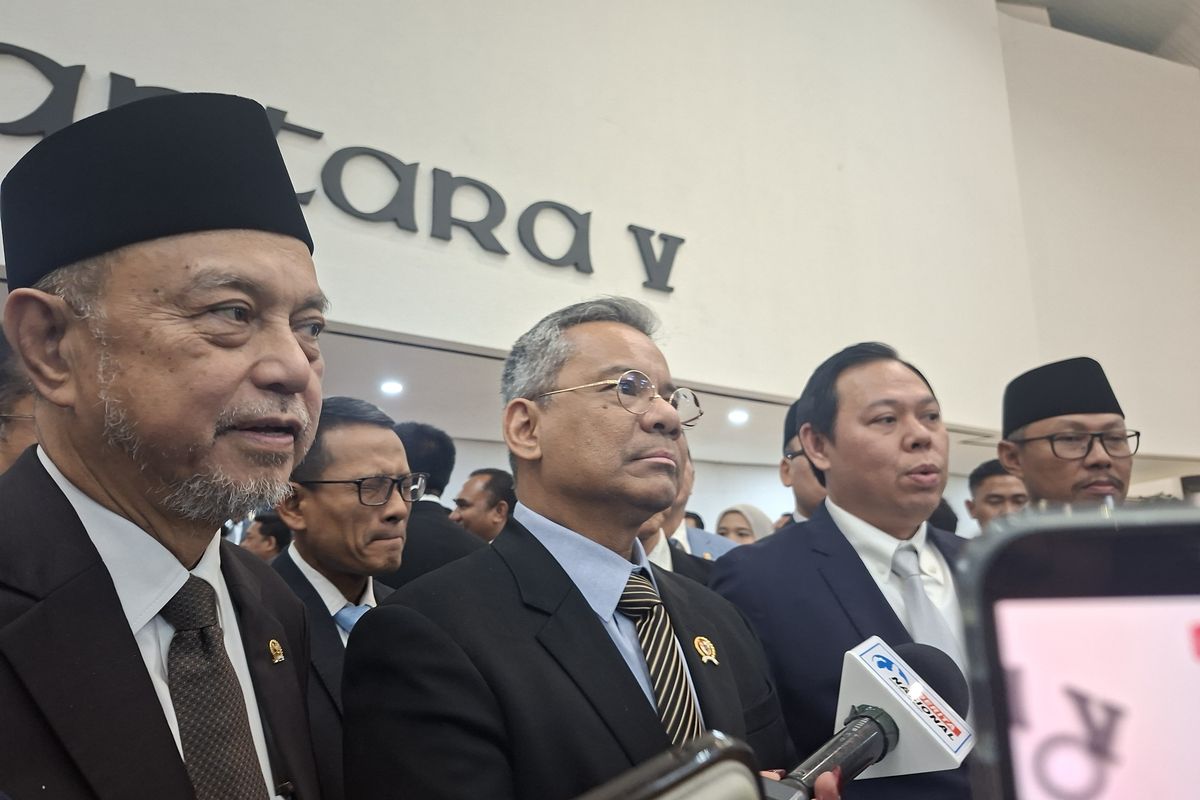
JAKARTA, KOMPAS.com - Finance Minister Suahasil Nazara firmly reiterated that the government will adhere to the 3 percent maximum deficit limit of the State Budget (APBN) relative to Gross Domestic Product (GDP).
Suahasil made this statement in response to the discourse initiated by DPR Commission XI Chair Mukhamad Misbakhun, who has advocated for relaxing the 3 percent deficit limit as an absolute figure within Indonesia's fiscal policy.
He emphasized that the Ministry of Finance will continue to operate based on Law Number 17 of 2003 concerning State Finance.
"Right now, we work according to the existing law. The state finance law, Law Number 17 of 2003. We adhere to that," Suahasil said during the APBN KiTa press conference at the Ministry of Finance office, Central Jakarta, on Friday (18/9/2026).
According to him, while various discussions about the APBN deficit limit have arisen previously, the government remains committed to abiding by the current regulations.
"There have always been discussions since before, but we at the Ministry of Finance, as the fiscal manager, will continue to work according to the law," he added.
Suahasil stated that the government uses the 3 percent figure as the maximum allowable APBN deficit.
He affirmed his commitment to maintaining the deficit within this threshold.
"We use 3 percent as the maximum APBN deficit. And I am committed to that," he said.
Therefore, in the submission of the 2027 State Budget, the government has estimated a deficit of 2.4 percent of GDP.
Suahasil noted this figure has also been conveyed by President Prabowo Subianto in his speech when presenting the State Budget and its financial note.
He reiterated that the Ministry of Finance will carry out fiscal management in accordance with the applicable laws and regulations.
"We work with that. Therefore, I want to ensure that the Ministry of Finance complies with the law," he said.
Suahasil also called for discussions on the deficit limit to be conducted constructively.
He reminded that managing the financial sector is not only about the numbers on paper but is also influenced by expectations and hopes.
"But sometimes it works based on expectations, hopes, and expectations. We do not want to create expectations that later make managing our own fiscal affairs difficult," he added.
Earlier, DPR Commission XI Chair Mukhamad Misbakhun urged that the APBN deficit limit of 3 percent of GDP should not be treated as an absolute figure.
Misbakhun questioned the legal basis for making this figure a mandatory threshold, especially when the government needs fiscal space to stimulate economic growth.
"People talk about a 3 percent deficit, I asked in which article. No one can mention it. Deficit is not a norm. Deficit is not in the norm," Misbakhun said during a General Hearing (RDPU) at the DPR RI on Thursday (17/9/2026).
According to Misbakhun, the provisions in Law Number 17 of 2003 on State Finance regulate that if the APBN runs a deficit, the government must prepare a debt financing plan.
Meanwhile, the 3 percent figure appears in the explanation section of the law.
Misbakhun argued that the discussion about the deficit is not solely about whether the number is below or above 3 percent but also concerns sufficient fiscal space to meet development needs.
He then urged a deeper discussion regarding the origin of the 3 percent deficit limit and its relevance to the current condition of Indonesia.
He noted that Indonesia currently enjoys a demographic bonus that can be leveraged to drive economic transformation and escape the middle-income trap.