Ahrie Sonta Appeals Dismissal Over Prabowo Wiretap Case Repercussions
-
News
-
2 minutes ago
This article was translated by AI. Read the original article on Kompas.com. See Original
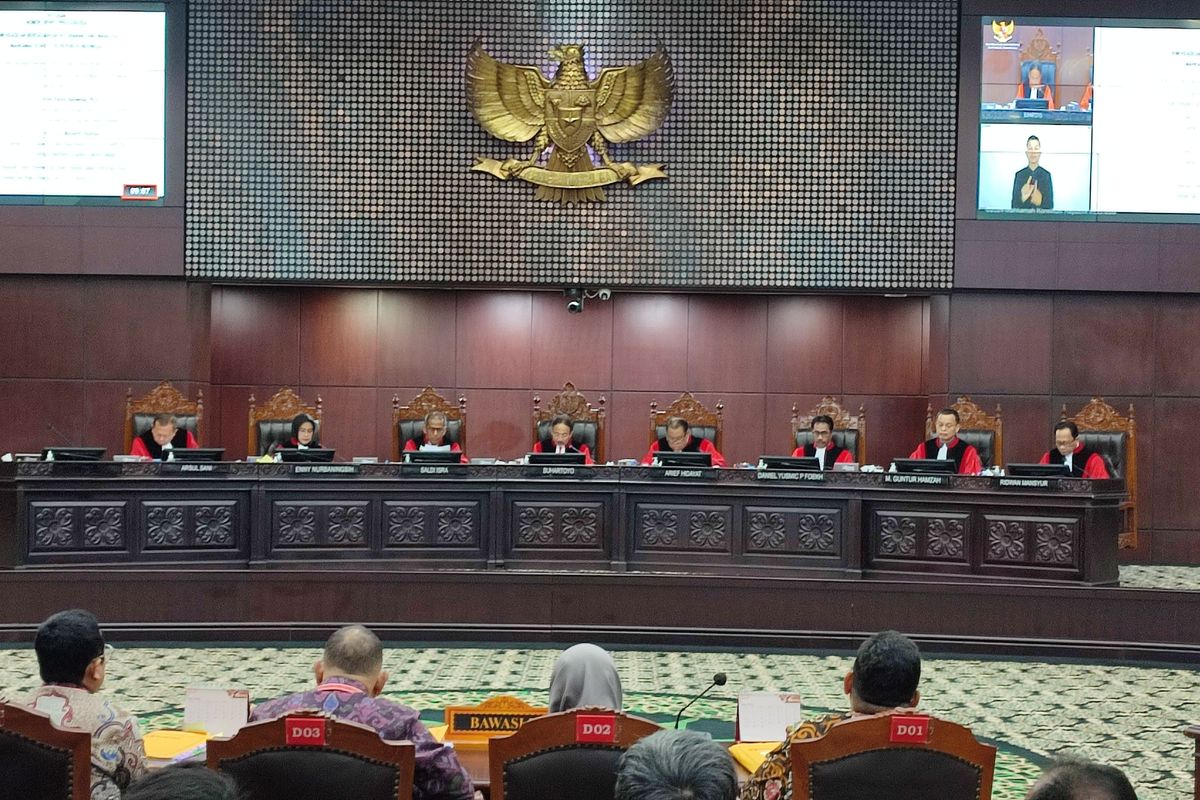
JAKARTA, KOMPAS.com - The Constitutional Court (MK) is set to hold a hearing on the dispute concerning the presidential election results (PHPU) regarding the vice-presidential candidacy of Gibran Rakabuming Raka, case number 01/PHPU.PRES-XXIV/2026, which was filed by Denny Indrayana and others.
The hearing is scheduled for September 21, 2026, in accordance with the Constitutional Court Regulation (PMK) newly issued on September 16, 2026.
The consideration section of PMK 1/2026 states that this regulation was issued following the receipt of the 2024 presidential PHPU lawsuit on September 10, 2026.
"That the determination of stages, activities, and schedules for handling the petition as referred to in letter c constitutes procedural regulation and does not represent an assessment of the substance of the petition," reads the consideration section letter d of PMK 1/2026, as retrieved from the official MK website on Friday (18/9/2026).
The PMK also details a 14-day hearing schedule set in accordance with the Election Law Number 7 of 2017.
However, the Election Law also limits the maximum timeframe for filing a PHPU presidential dispute to no later than three days after the General Elections Commission (KPU) announces the results.
Zainal Arifin Mochtar, a Professor of Constitutional Law at Gadjah Mada University (UGM), commented that the MK's decision to issue a new PMK and reopen the PHPU hearings reflects prudence.
This is because the MK is bound by Law Number 48 of 2009 on Judicial Power, which prohibits courts from refusing to examine, hear, or decide cases submitted to them.
"I think the MK is simply exercising caution, as it cannot hold hearings without any process. Hearing this case does not necessarily mean it will proceed," he said.
Nicknamed Uceng, he explained that the MK might hold the hearing only to rule that presidential disputes must comply with the Election Law, which stipulates a maximum of three days since the KPU declares the winner.
Rejections can only be made by the MK through a hearing, not by dismissing the case before it is heard.
"Holding the hearing might also result in a decision strictly enforcing the three-day limit for filing disputes," he added.
The MK could also reaffirm that only candidates participating in the presidential election can file disputes, and not Denny Indrayana.
However, Uceng emphasized that the MK is currently upholding Article 10 of the Judicial Power Law, which forbids courts from rejecting any case before it is heard.
"But at the very least, this affirms Article 10 about judicial power, which prohibits courts from rejecting cases brought before them," he said.
Uceng also explained that the consequence of the new PMK is that the MK must provide equal treatment to all PHPU disputes whenever a dispute is filed.
"The consequence is that the MK must treat all other petitions equally; that's the consequence," he added.