

Cak Imin Encourages Pesantren-Based Vocational Schools to Elevate Standards to International Levels
-
News
-
20 minutes ago
This article was translated by AI. Read the original article on Kompas.com. See Original
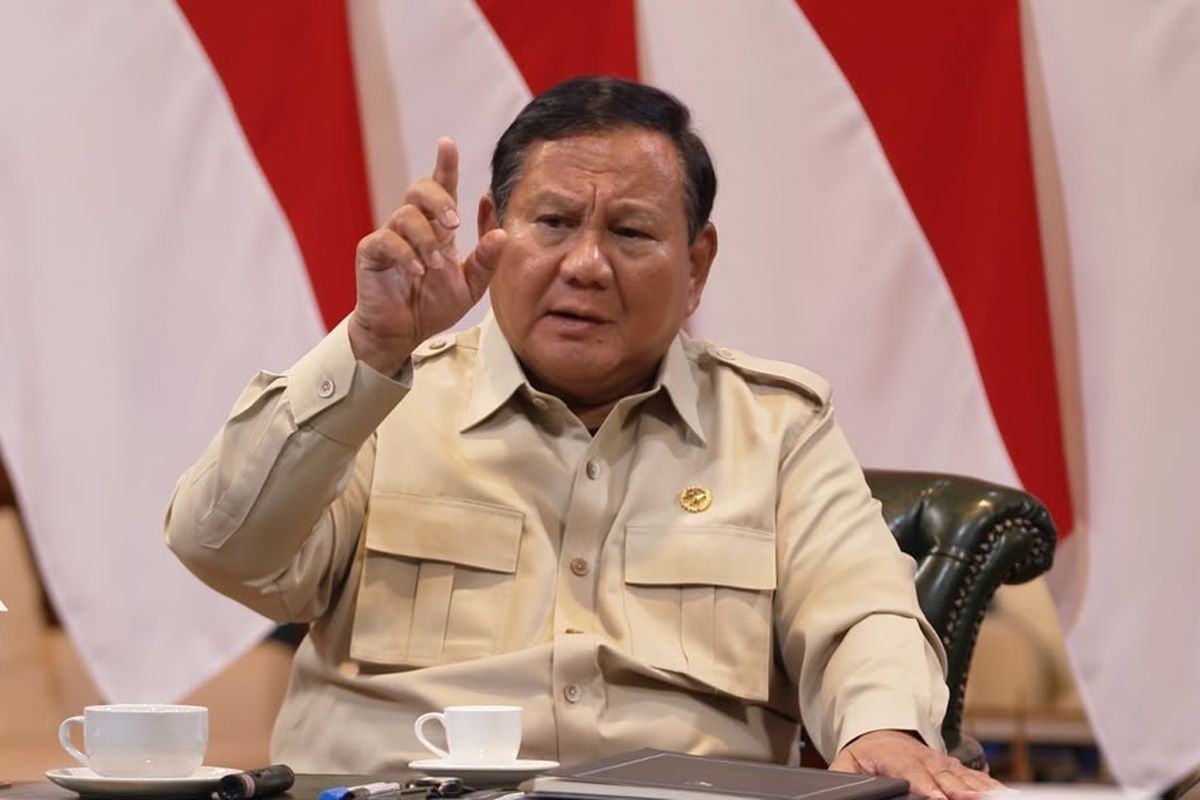
JAKARTA, KOMPAS.com - President Prabowo Subianto has highlighted the issue of many regional governments (Pemda) hoarding funds in banks.
These funds are transferred from the central government with the intention that they be used optimally for local development.
Prabowo even stated that he has evidence of some regional governments deliberately parking money in banking institutions.
“Sometimes it’s strange, the money from the Pemda is not used. We have evidence, it’s kept in banks; there are various reasons, including conflicts between regents and the regional parliament. So, the money has been transferred but not utilized,” Prabowo said, as quoted from the “President Prabowo Answers” program on Prabowo Subianto’s YouTube channel, Friday (18/9/2026).
According to Prabowo, this situation hampers development, especially infrastructure projects in villages.
The issue of regional government funds lying idle in banks is not new.
The previous Finance Minister before Suahasil Nazara, Purbaya Yudhi Sadewa, also raised concerns about the large amounts of Pemda funds unused and still held in banks.
According to Ministry of Finance records, Pemda funds idle in banks reached Rp 194.1 trillion in 2021.
This figure rose to Rp 223.8 trillion in 2022. In 2023, the idle funds decreased to Rp 211.7 trillion, then further declined to Rp 208.6 trillion in 2024.
However, in 2025, the amount surged again to Rp 234 trillion.
Purbaya previously noted that Pemda funds stored in banks fluctuated over the last five years.
Executive Director of the Center of Economic and Law Studies (Celios), Bhima Yudhistira, believes that low regional budget absorption is not solely because Pemda intentionally saves funds in banks.
“Prabowo only views it from the central government’s perspective. The underutilization of regional budgets is due to many factors,” Bhima told Kompas.com on Friday (18/9/2026).
Bhima cited strong central government directives to regions, especially through the Special Allocation Fund (DAK), as a factor affecting budget absorption.
He said DAK is directed to finance central government priority programs. This condition limits the space for regional governments to determine their own development priorities.
According to Bhima, this situation also makes regional heads more cautious in implementing locally prioritized programs because they have to align them with central government policies.
The second factor is regional officials' apprehension about legal risks when executing development projects.
“Secondly, contract officials fear getting involved in legal cases. This slows down bureaucracy and budget absorption,” he explained.
Prabowo also pointed out the slow pace of village infrastructure development despite the central government channeling Village Funds.
He stated that the government has disbursed about Rp 1 billion per village annually over the last ten years.
“How long has decentralization been running? 25 years, right? We have transferred funds to each village. Rp 1 billion, for the past ten years. Transfers to regions have been made. So why aren’t bridges in villages being built? A bridge only costs around Rp 400 million,” Prabowo emphasized.
He questioned why the budget that has been allocated has not fully translated into visible village infrastructure development.
Previously, Prabowo also mentioned other issues hindering regional budget use, including conflicts between regional heads and regional parliaments.
The large amount of funds idling in banks ultimately raises questions about the causes of low regional budget absorption and how much of these funds can actually be deployed for development.
Therefore, the problem of Pemda funds idling is not only related to the considerable budget transferred by the central government but also involves the regions' capacity to execute programs, bureaucratic processes, and the division of authority between central and regional governments.