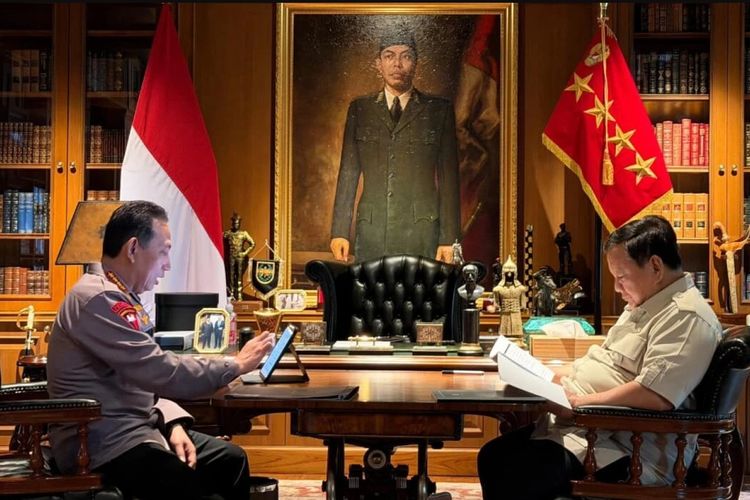


DKPP Highlights KPU's Inconsistent Statements Regarding 'Gibran's Education Article'
-
News
-
4 hours ago
This article was translated by AI. Read the original article on Kompas.com. See Original
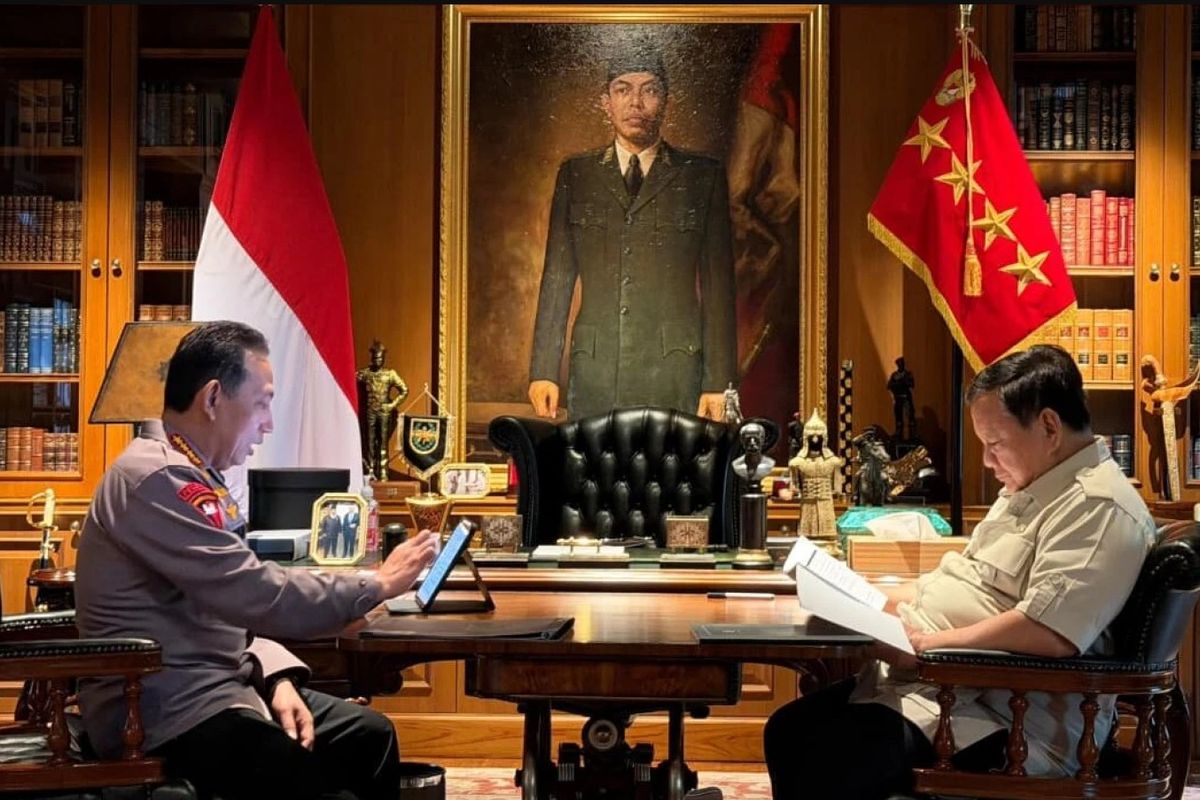
THE PUBLIC has recently been taken aback by the stance of the Criminal Investigation Department of the National Police, which has named three generals, including a former Chief of Police, as suspects in a case involving illegal wiretapping of President Prabowo's phone and several public figures.
Isn’t the act of wiretapping without lawful enforcement interest an irony in a rule of law?
Wiretapping is one of the most invasive instruments that a state can wield.
Therefore, when allegations arise that police tapped the phones of the President and several public figures without a legitimate legal basis, this is not just a violation of law enforcement procedures.
Instead, it strikes at the legitimacy of the state’s political power, constitutional protections of privacy rights, and the public’s trust in the police force, which is suspected of becoming a political interest bunker.
Moreover, this wiretapping is alleged to have occurred since 2024. If these allegations are proven true, we are witnessing a grievous irony in the rule of law.
How can the police, an institution mandated to uphold the law, be suspected of using state coercive instruments outside legal purposes?
In a rule of law, authority is never synonymous with freedom of action. Article 28G paragraph (1) of the 1945 Constitution guarantees personal, family, honor, dignity, and safety protection.
Privacy of communication is part of that guarantee. Any restrictions must be based on law, serve legitimate aims, be necessary, and proportionate.
Furthermore, the Constitutional Court Decision Number 5/PUU-VIII/2010 emphasizes the importance of regulating wiretapping through legislation.
Meanwhile, Article 31 of the Electronic Information and Transactions Law and provisions in the Telecommunications Law must be read alongside sectoral regulations that grant authority for interception in the interest of law enforcement.
These regulations are tightly controlled, stipulating clearly who has authority, for what matters, based on what evidence and procedure, against whom, and for what duration.
If it is indeed true that wiretapping has been conducted against the President, political party leaders, civil society organizations, and the media without any connection to criminal investigations, then it truly begs the question, in whose interest does the state apparatus work?
Is it in the interest of the law, or to gather political information?
Wiretapping without legitimate legal purpose has the potential to transform the police’s role from protector of the public to an instrument of power surveillance.























