

DKPP Highlights KPU's Inconsistent Statements Regarding 'Gibran's Education Article'
-
News
-
3 hours ago
This article was translated by AI. Read the original article on Kompas.com. See Original
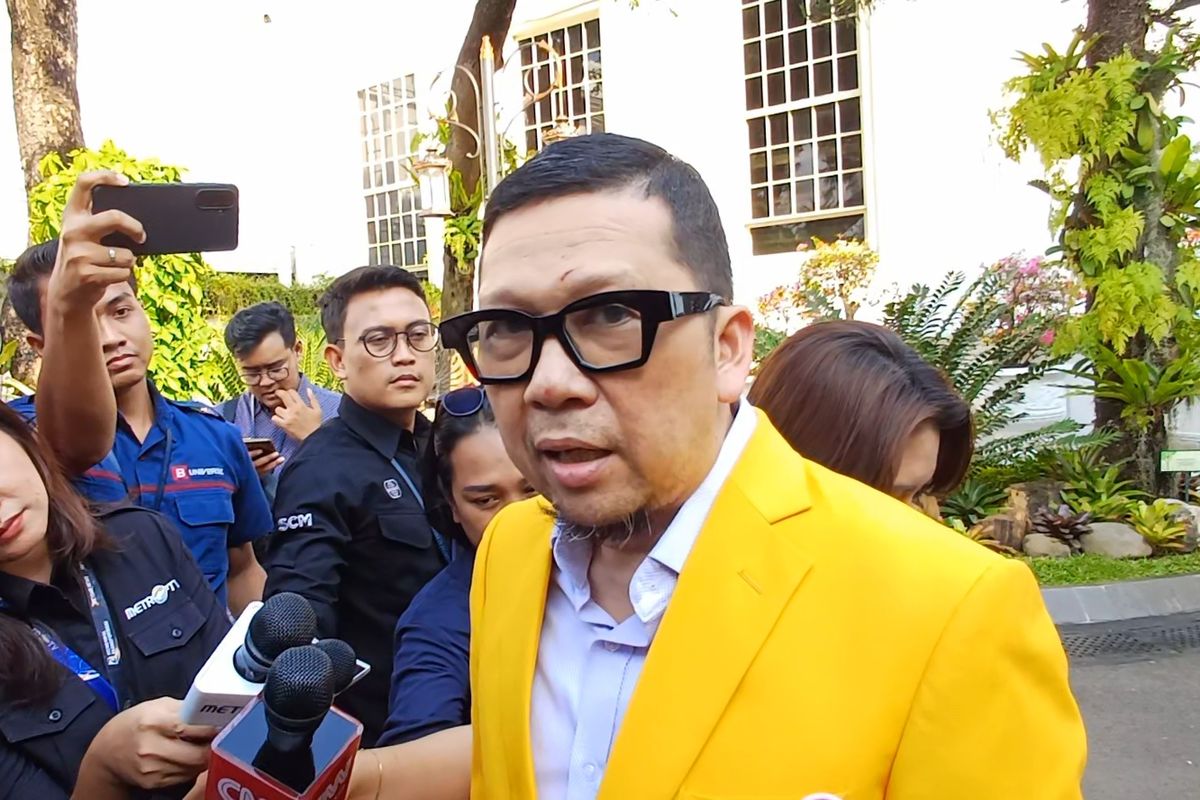
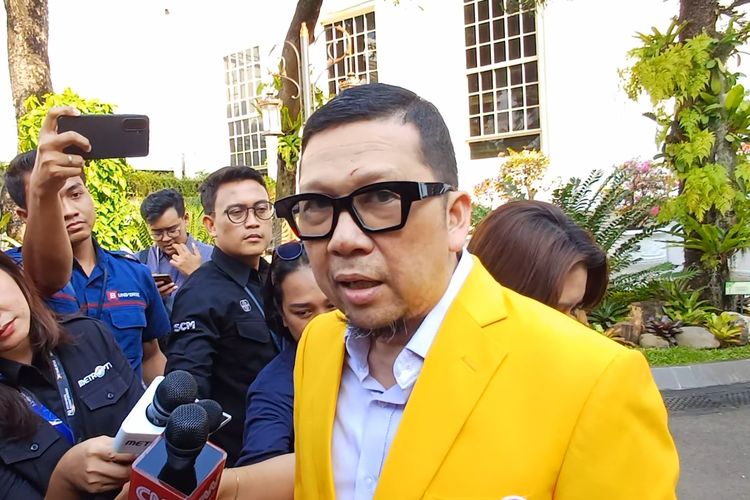
JAKARTA, KOMPAS.com - Ahmad Doli Kurnia, Deputy Chairman of the Golkar Party, believes that the Indonesian Parliament (DPR RI) should utilize its right to express opinions (HMP) if it intends to follow up on the controversy surrounding the diploma and the equivalency certificate (suket) of Vice President Gibran Rakabuming Raka.
According to Doli, mechanisms such as inquiry rights, interpellation, or the formation of special committees are irrelevant for addressing the issues that have already been revealed and decided by the Constitutional Court (MK) and the Supreme Court (MA).
"I consider the rights of inquiry, interpellation, or any forms of special committees to be irrelevant. What for?" Doli stated when met at the DPR RI building on Monday (2/11/2026).
This member of Commission II of the DPR noted that if the purpose of addressing this controversy is to terminate Gibran, the Parliament should specifically use its inquiry rights.
Doli explained that the use of the right to express opinions is regulated under Articles 7A, 7B, and 7C of the 1945 Constitution.
This mechanism is part of the supervisory function of the DPR as mandated by the Constitution.
"If termination is stipulated in Articles 7A, 7B, and 7C, that’s the mechanism. How? Through the use of the right to express opinions, that’s all. It's already stipulated there. And in Article 7A, paragraph 2, that is part of the supervisory function of the DPR," Doli elaborated.
He stated that the DPR can express opinions through its respective factions. In this process, there are support requirements that must be met.
"The DPR expresses its opinions of course through each faction, or it is required that there should be 2/3 expressing that," Doli said.
Doli indicated that the DPR RI should also provide evidence if it finds allegations of violations that could serve as grounds for the termination of the president or vice president.
Allegations of violations may include treason, corruption, bribery, other serious crimes, disgraceful acts, or not meeting the qualifications to remain in office as president or vice president.
The DPR’s opinions will then be tested by the Constitutional Court (MK).
If the MK confirms the DPR's opinions, the next process will revert to the DPR to be submitted to the People's Consultative Assembly (MPR).
"If the Constitutional Court states that what the DPR has expressed is correct, then it returns to the DPR to submit it to the MPR," Doli stated.
Nevertheless, Doli cautioned that the process of terminating a president or vice president is not simple.
According to him, such termination requires strong reasons and evidence, as well as passing through multiple stages.
He mentioned that his party still needs to assess whether the decisions of the MA and MK regarding Gibran's educational document controversy are sufficiently strong grounds for further action through the DPR mechanism.
"The process of terminating the president and vice president is not easy. It requires sufficiently strong reasons. Now, this is what we are considering, whether the MK and MA decisions are indeed strong enough to trigger that process. I think that will be discussed in the leadership meeting of the political party leaders," Doli remarked.
Therefore, Doli emphasized the need for party leaders in the DPR to meet soon to discuss the follow-up on the Gibran diploma controversy, which has already been deliberated and decided by the MK and MA.