

Golkar Starts Revving Up for the 2029 Elections, Aiming for 2 Million Young Cadres Through AMPG Training
-
News
-
5 minutes ago
This article was translated by AI. Read the original article on Kompas.com. See Original
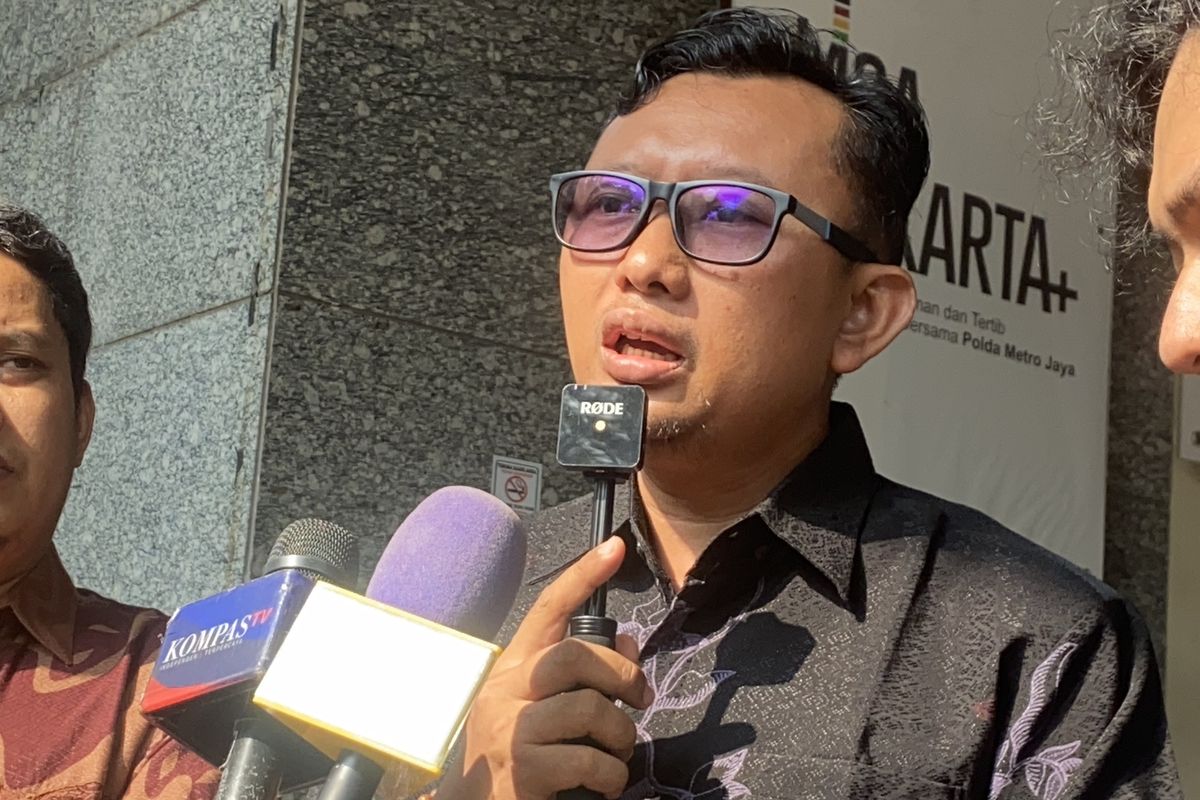
JAKARTA, KOMPAS.com - The Chairperson of the Indonesian Legal Aid Foundation (YLBHI), Muhammad Isnur, considers the Constitutional Court's ruling Number 260/PUU-XXIII/2025, which states that Law No. 31 of 1997 on Military Courts contradicts the Constitution, to be a historic change.
"They (the petitioners) have successfully changed history. So, we should indeed be grateful to Ms. Eva and Ms. Leni and the advocacy team for changing this landscape, something that many civil society groups have yet to achieve," Isnur stated during a press conference monitored online via the Imparsial YouTube channel on Friday (16/10/2026).
Isnur praised the efforts of Eva and Lenny as the petitioners that led to this outcome.
According to him, the Constitutional Court's ruling yesterday reflects a struggle voiced by civil society for over two decades.
"For a long time, civil society has been shouting. Since 1998, in 2000, 2004, one of the biggest advocacy efforts in the reform of the reform sector is to restore the position of the judiciary where it truly becomes independent, placing the military in a position that respects civilian supremacy and rule of law. This has not been actualized for two decades," he asserted.
YLBHI reported that there have been 58 cases of violence or legal violations committed by members of the military.
Therefore, he considers this ruling to be very timely given the increasing military takeover of civilian areas.
"Why? Because now the military's intrusion and militarization of civilian areas are going rampant. All areas are being militarized. Rice farming, displacing land in Merauke over millions of hectares, KDMP. These are all civilian areas. Building warehouses is a civilian area, but everything is under military control," he explained.
Additionally, Isnur views this ruling as a new era for the judiciary.
He hopes that the Supreme Court will provide a framework for civilian courts moving forward for the military.
"Yes, because I am afraid, I am concerned there will be serious interventions or rejections from the military. There will be attempts at sabotage, so this doesn’t go through. For me, we shouldn’t wait two years," he cautioned.
The Constitutional Court declared that Law No. 31 of 1997 on Military Courts is conditionally unconstitutional as long as it is not amended within two years from the date of the ruling.
"The ruling states, to adjudicate, grant the petitioners' request in full," reads the first part of the ruling.
The second part of the ruling states that Law 31/1997 on Military Courts contradicts the 1945 Constitution of the Republic of Indonesia.
In its legal considerations, the Court believes that for common crimes committed by TNI soldiers, using the civilian justice system can prevent the risk of impunity.
"Therefore, the Court holds that military courts gain legitimacy from the specificity of military cases, so when there are no specific cases, the rationale for maintaining the jurisdiction of military courts loses its foundational basis," the ruling stated.