

Golkar Holds Peak Celebration for 62nd Anniversary in Sentul, Prabowo and Other Party Leaders Scheduled to Attend
-
News
-
30 minutes ago
This article was translated by AI. Read the original article on Kompas.com. See Original
JAKARTA, KOMPAS.com - Member of the Indonesian House of Representatives, Amelia Anggraeni, has urged for an immediate revision of Law No. 31 of 1997 concerning Military Courts, following the Constitutional Court's decision declaring the law conditionally unconstitutional.
Amelia emphasized that the Constitutional Court's ruling should be taken seriously by the House and the government, as the Court has set a deadline of two years for revising the Military Courts Law.
"The two-year deadline provided by the Constitutional Court should be seen as an opportunity to formulate stronger regulations, not as an excuse to delay discussions," Amelia told Kompas.com on Friday (16/10/2026).
She believes that the revision of the Military Courts Law needs to be comprehensive and involve various stakeholders, including the TNI (Indonesian National Armed Forces), law enforcement authorities, academics, and civil society.
Amelia asserted that changes in regulation should not stop at adjusting norms but must lead to clear, transparent, and accountable law enforcement mechanisms. "
The investigation, prosecution, trial, and enforcement of decisions must have certainty in authority and procedures that do not create conflicts among institutions," explained Amelia.
The Nasdem Party politician added that the revision of the Military Courts Law needs to clearly regulate the authority and procedures for law enforcement against TNI personnel committing crimes.
According to her, certainty regarding the competent judicial forum is crucial to avoid ambiguity in case handling.
"Ultimately, I see this decision as a moment to strengthen reforms in the defense and legal sectors. The principle is simple: there should be no doubt about the competent judicial forum," concluded Amelia.
Echoing Amelia's thoughts, fellow member of Commission I of the House, TB Hasanuddin, stated that the Constitutional Court's ruling further solidifies the need to revise the Military Courts Law, particularly regarding the jurisdictional boundaries between military courts and general courts.
"With the issuance of the Constitutional Court's decision, this provision has been reinforced. This ruling also strengthens the need to revise Law No. 31 of 1997 concerning Military Courts, especially concerning the jurisdictional boundaries between military courts and general courts," said TB Hasanuddin.
“And this deadline provides a stronger constitutional basis for both the government and the House,” he added.
According to TB Hasanuddin, the ruling directly clarifies the provisions in Article 65 paragraph (2) of Law No. 34 of 2004 concerning the TNI, as amended by Law No. 3 of 2025.
The article stipulates that TNI personnel who commit military offenses are tried in military courts, while those committing general offenses are tried in general courts.
“Article 65 paragraph (2) states that TNI personnel committing military offenses are tried in military courts. Meanwhile, personnel committing general offenses are tried in general courts,” said the PDI-P politician.
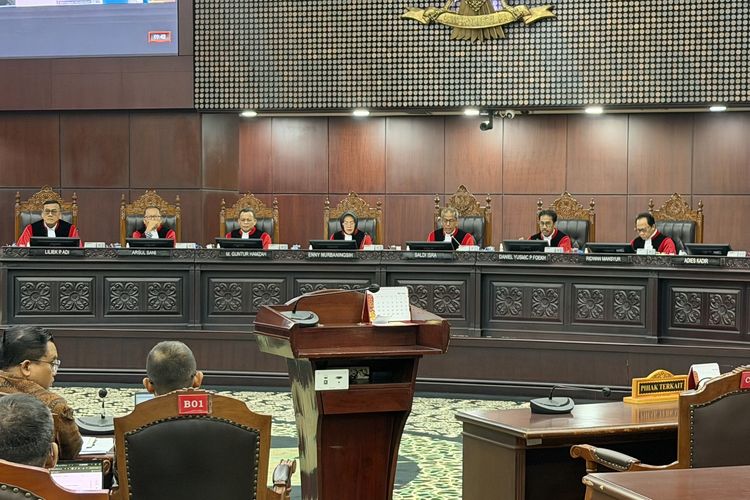
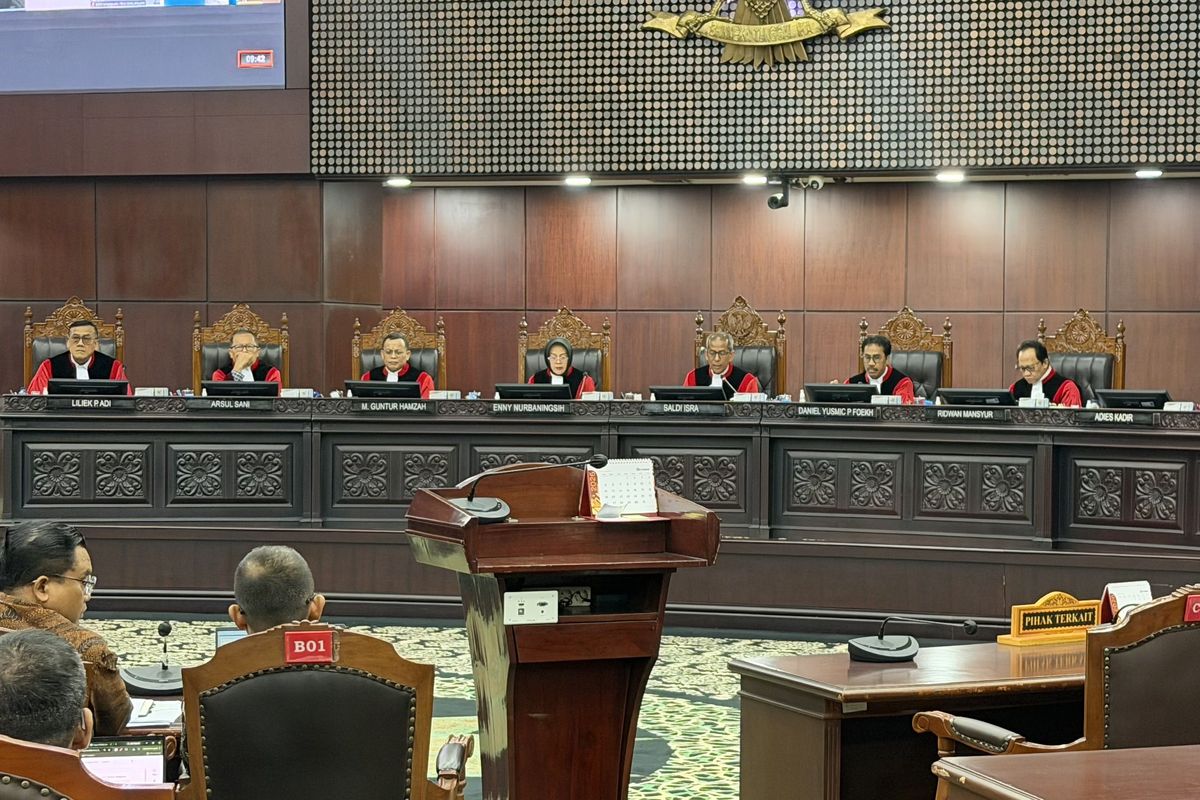
Previously reported, the Constitutional Court declared that Law No. 31 of 1997 concerning Military Courts is contrary to the 1945 Constitution and does not have conditional legal binding power as long as it is not revised within a maximum period of two years from the issuance of the ruling.
This decision is documented in case number 260/PUU-XXIII/2025 and was announced on Thursday (15/10/2026).
The Constitutional Court requested that the revision of the Military Courts Law include clear definitions regarding military offenses and general offenses, including jurisdictional limitations of military courts and general courts concerning offenses committed by TNI personnel.
The Constitutional Court also called for a mechanism for resolving disputes over determining which judicial forum is competent to handle TNI personnel cases.
If the law is not amended within two years from the ruling, the Court declared that the law is unconstitutional and will no longer be in effect.
























