

PKB Proposes Allowing PPPK Over 35 to Participate in CPNS Selection
-
News
-
2 minutes ago
This article was translated by AI. Read the original article on Kompas.com. See Original

KOMPAS.com - Can Indonesia grow by 8 percent by 2029, or is that figure merely a political slogan without a realistic foundation? This question is certainly worth asking.
For the past decade, our economy has settled around 5 percent. An 8 percent growth target seems like a significant leap without any prior groundwork. However, at the beginning of September, in Ancol, Jakarta, this question began to be addressed differently.
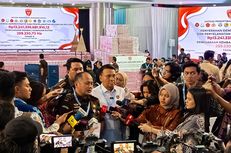
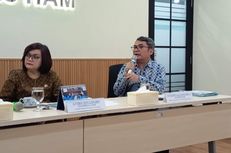
The Ministry of Home Affairs, the National Development Planning Agency (Bappenas), and the Central Statistics Agency (BPS) convened together (4-6/9/2026) to hold a coordination meeting to formulate a work plan for the Regional Economic Growth Acceleration Monitoring Team, established by the Ministry of Home Affairs.
The outcome of this meeting is a consensus that carries a simple yet serious message.
The 8 percent economic growth target at the end of Prabowo's administration in 2029 will not emerge solely from Jakarta. It needs to be driven from the provinces, regencies, and cities throughout Indonesia. Regional areas will be the spearhead of this growth.
For me, the Ancol meeting represents an interesting starting point. Until now, growth targets have often been discussed as the domain of the Ministry of Finance. Now, the Ministry of Home Affairs as the regional coordination body is present to ensure that local government machinery plays its part as a driver.
Bappenas is tasked with maintaining the planning direction, while BPS provides a detailed data mirror for each sector's economic pulse. These three institutions are building synergy that has previously felt like operating in isolation.
The 8 percent target for 2029 is not just a number that fell from the sky. It is outlined in the 2025-2029 Medium-Term Development Plan (RPJMN) through Presidential Regulation No. 12 of 2025. This document elaborates on the President Prabowo Subianto's vision of Asta Cita.
Above it stands the National Long-Term Development Plan (RPJPN) 2025-2045 with the vision of Golden Indonesia. The ladder is clear: rising from 5.05 percent in 2024 to 8 percent in 2029.
The stakes are high, and if we fail: Indonesia risks becoming trapped in the middle-income trap.
Growth has successfully been accelerated from a low level to a middle level (emerging market), but then stagnates while struggling to advance to 'developed country' status.
Many countries find themselves ensnared in this involutive growth spiral condition. They stop moving up the ladder because they grow slowly for too long and thus lose momentum.
Per capita income may rise, but not quickly enough to break through developed country status. Indonesia needs to make bold and ambitious breakthroughs.
Prabowo himself has repeatedly stated: a great nation is one that dares to dream big and works hard to make it happen.
Let's look at the statistical data. Since President Prabowo took office, national economic growth has gradually risen. The BPS recorded 5.03 percent in 2024 and 5.11 percent in 2025.
In the second quarter of 2026, the figure reached 5.29 percent, an improvement compared to the same quarter the previous year, which was 5.12 percent. This means that progress has been made—albeit still relatively slow—and the direction towards 8 percent is correct.
However, we must acknowledge that the gap to 8 percent is still considerable, about 2.7 points.
Several regions have already proven that achieving high growth isn't impossible. North Maluku, for instance, grew by 15.35 percent in the second quarter of August 2026, supported by nickel downstreaming.
Last year, in the same quarter, this eastern province even grew by 32.09 percent. West Nusa Tenggara reached 7.41 percent after contracting by 0.8 percent the previous year. Riau Islands recorded 6.99 percent after experiencing 7.14 percent growth in the same quarter the previous year.
These regions can be described as prime movers showing that investment, job absorption, and downstreaming that yield added value can drive rapid growth.
The issue is that this pattern has not yet occurred uniformly across all regions. Every region in Indonesia has rich natural resource potential, productive demographic variables, and has relatively been woven into interconnected connectivity channels.
From this premise, the recent meeting of the three institutions in Ancol gleaned lessons. High growth emerges when regions have new sources of added value (source of growth), rather than merely relying on household consumption variables.
Investment must flow in, processing industries—large, medium, and micro—should be supported, and local government capital expenditure needs to be realized promptly to improve infrastructure while agricultural and horticultural products need to be processed.
Regions that only sell raw materials will always lag behind. Those that dare to process will leap further ahead.
Here lies the key potential of local governments. They control the APBD capital expenditure, hold the key to ease of business licensing and investment, determine productive spatial planning, and shape the local business climate.
Delayed or poorly planned capital expenditure will result in decreased project infrastructure quality.
Complicated licensing procedures lead to investors pulling out to other locations. If all 38 provinces and more than 500 regencies/cities are orchestrated to move together, the multiplier effect on growth will be very significant.
The primary goal of the Ancol meeting refers to efforts to orchestrate regions simultaneously based on data-driven strategies for the literacy of all OPD against BPS data graphics that directly influence the economic growth trend.
After the coordination meeting, Minister of Home Affairs Tito issued Ministerial Decision No. 500-1981/2026, establishing the Regional Economic Growth Monitoring, Guarding, and Acceleration Team.
Led directly by the Minister of Home Affairs together with three Deputy Ministers as Directors and the Secretary-General of the Ministry of Home Affairs as the Chairman, the 38 provinces have been divided among provincial teams with five main tasks: updating data on sources and contributions of growth from each sector, conducting analysis and diagnosis, identifying issues, providing assistance and debottlenecking, verification, and monthly reporting.