
Prabowo Meets Dasco in a Private Meeting at the Palace, What Was Discussed?
-
News
-
1 minute ago
This article was translated by AI. Read the original article on Kompas.com. See Original
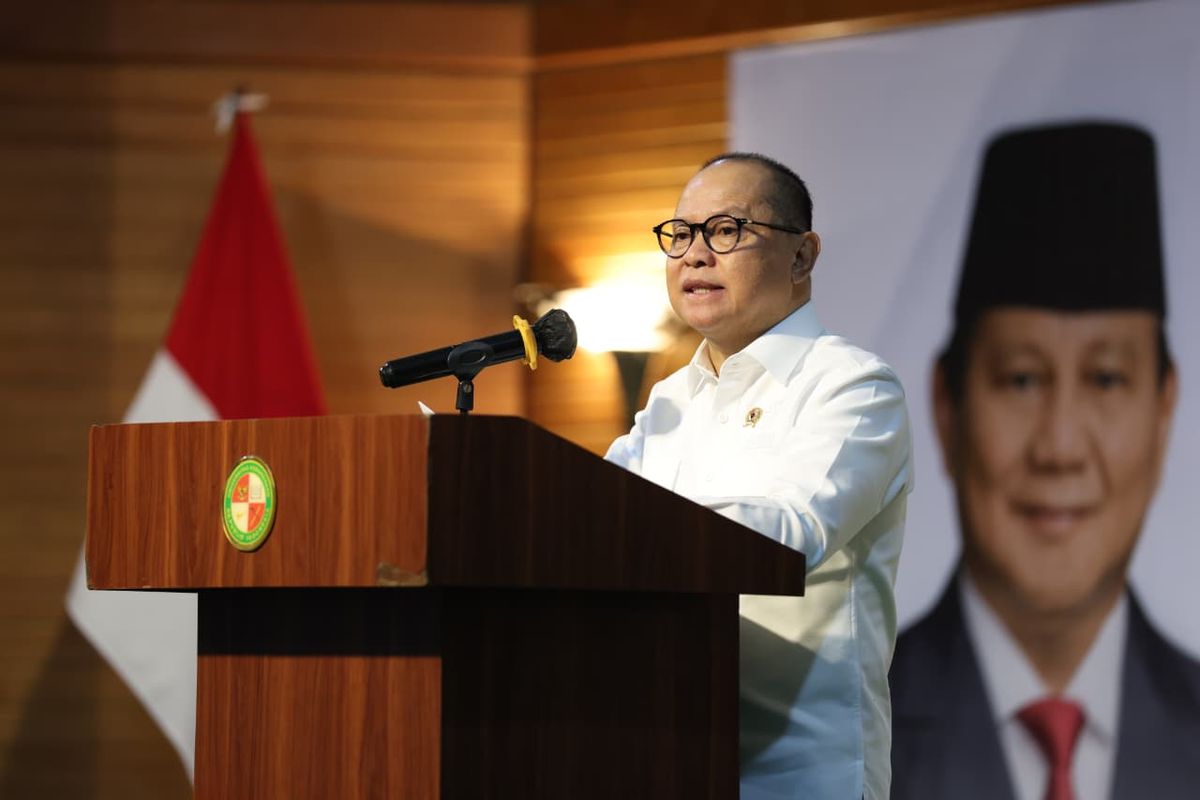
BANDUNG, KOMPAS.com - The Indonesian Minister of Migrant Workers Protection (P2MI) Mukhtarudin emphasized that the SMK Go Global program is a key government strategy to prepare a skilled, professional, and globally competitive Indonesian workforce, while also enhancing protections for migrant workers even before their departure.
“SMK Go Global is the government's tangible effort to equip Indonesian migrant workers with the skills, professionalism, and global competitiveness they need. This program also serves as a form of pre-departure protection, providing participants with competencies tailored to the demands of the international job market, thus ensuring they are ready to work through legal, safe, and protected channels,” Mukhtarudin stated in a press release on Friday (9/10/2026).
As of October 8, 2026, there were 1,319 participants in the SMK Go Global training from the West Java Migrant Workers Protection Service (BP3MI), marking the highest number of participants compared to other BP3MI regions.
Specifically at the National University of Indonesia (UKRI), the training was attended by 175 participants divided into nine classes.
The program consists of three training fields: operation production and English with 57 participants in three classes, welding and English with 20 participants in one class, and barista and English with 98 participants in five classes.
According to Mukhtarudin, this training is a competency enhancement or upskilling program for participants who already possess basic skills in their fields.
Through training and certification, it is hoped that participants' skills will increasingly meet international competency standards and the needs of the job market.
“Strengthening skilled labor is becoming increasingly important in the midst of Indonesia's demographic bonus. While Indonesia has a large productive-age population, some countries are facing labor shortages due to the phenomenon of an aging population,” he added.
This situation presents strategic opportunities for Indonesia to fill labor needs in the global market.
However, these opportunities must be matched with improvements in skills, foreign language mastery, discipline, and cultural understanding of the destination countries.
“Training in the SMK Go Global program is fully financed through the state budget (APBN). This is a commitment from the Ministry of P2MI to provide high-quality training that meets international labor market needs,” the Minister stated.
He explained that the implementation of this program is based on the Asta Mandala SMK Go Global framework, designed so that the policy of placing migrant workers is not solely focused on the number of workers dispatched.
Through this foundation, the government promotes the achievement of the Panca Sukses, which includes success in competency, protection, placement, remittances, and governance.
These five targets are expected to yield a Tri Impact, which includes social impact, enhanced human resource quality, and economic impact.
To expand the program's reach, the Ministry of P2MI aims to establish 2,000 training classes across all 23 BP3MI regions.
UKRI is one of the program's implementation partners, with training activities having commenced in early September 2026.
The Ministry of P2MI has also set gradual migrant worker placement targets through the SMK Go Global program, aiming for 40,000 individuals in 2026, 140,000 in 2027, 180,000 in 2028, and 140,000 in 2029.
Meanwhile, UKRI's Vice-Rector II Erdiansyah expressed appreciation for the visit of the P2MI Minister and the implementation of the SMK Go Global program on campus.
According to Erdiansyah, collaboration between universities and the government is essential to build an education and training ecosystem that can meet global labor demands.
“We want young Indonesians working abroad not just to be regarded as laborers but as competent professional Indonesian workers who are cultural, have integrity, and can uphold the nation's good name,” Erdiansyah stated.