

PKB Proposes Allowing PPPK Over 35 to Participate in CPNS Selection
-
News
-
2 minutes ago
This article was translated by AI. Read the original article on Kompas.com. See Original
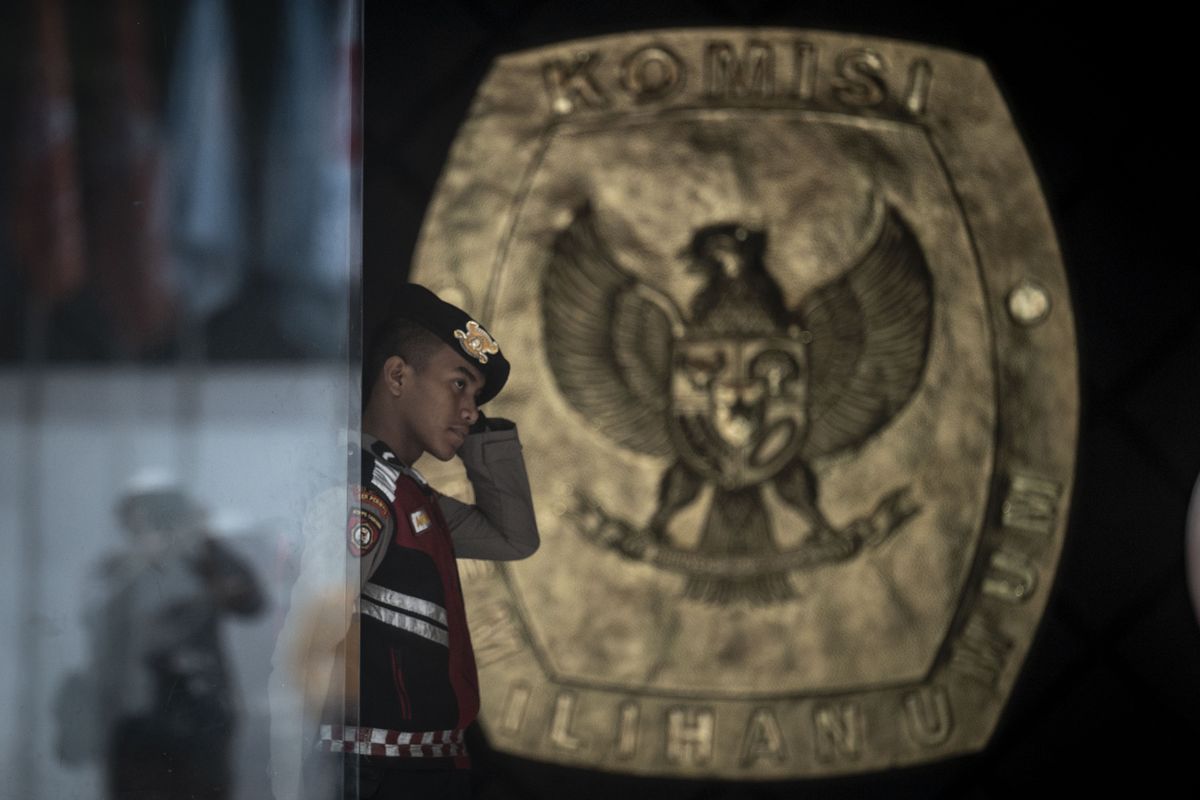
JAKARTA, KOMPAS.com - Election observers have drawn lessons from the Constitutional Court's (MK) ruling regarding Gibran Rakabuming. They argue that the General Election Commission (KPU) must factually verify the educational documents of presidential and vice-presidential candidates while considering four key aspects.
The MK's decision in case number 01/PHPU.PRES-XXIV/2026 concerning the educational requirements for Vice President Gibran Rakabuming Raka stated that there were no documents proving Gibran held a diploma or certificate validating his completion of education abroad equivalent to high school.
This ruling serves as a caution for election organizers to strengthen the candidate verification process, particularly to prevent similar issues from arising after a candidate is declared eligible.
Constitutional law expert from Andalas University, Charles Simabura, noted that the KPU needs to shift its verification approach, which has predominantly relied on document checks.
"I think what has transpired today sends a message that the KPU must begin transitioning from merely checking and verifying documents to also conducting factual verification," Charles told Kompas.com on Wednesday (7/10/2026).
He stated that such factual verification should ideally become a standard, especially for the nomination of a president and vice president.
"This verification should set a standard, at least in the context of examining presidential and vice-presidential candidates," he added.
Charles argued that a uniform standard is more feasible for presidential and vice-presidential nominations, given there are significantly fewer candidates to review compared to legislative candidates.
"For legislative nominations, I agree that such stringent checks may not be necessary as there are so many candidates. However, for presidential and vice-presidential candidates, factual verification should be required to avoid similar incidents in the future," he said.
The KPU needs to change its verification standard from mere document checking to substantive examination.
Regarding foreign educational documents, Neni suggested at least four layers of scrutiny.
First, authenticity, meaning the documents must be verified as genuinely issued by accredited educational institutions.
Second, completion, ensuring that the documents demonstrate that the candidates have indeed completed the necessary level of education, rather than merely having participated in courses.
Third, equivalence, confirming that the education equivalency process by Indonesian education authorities aligns with the expected educational levels under the Election Law.
Fourth, traceability, ensuring that the verification process has a clear administrative trail.