

Cak Imin Encourages Pesantren-Based Vocational Schools to Elevate Standards to International Levels
-
News
-
2 hours ago
This article was translated by AI. Read the original article on Kompas.com. See Original
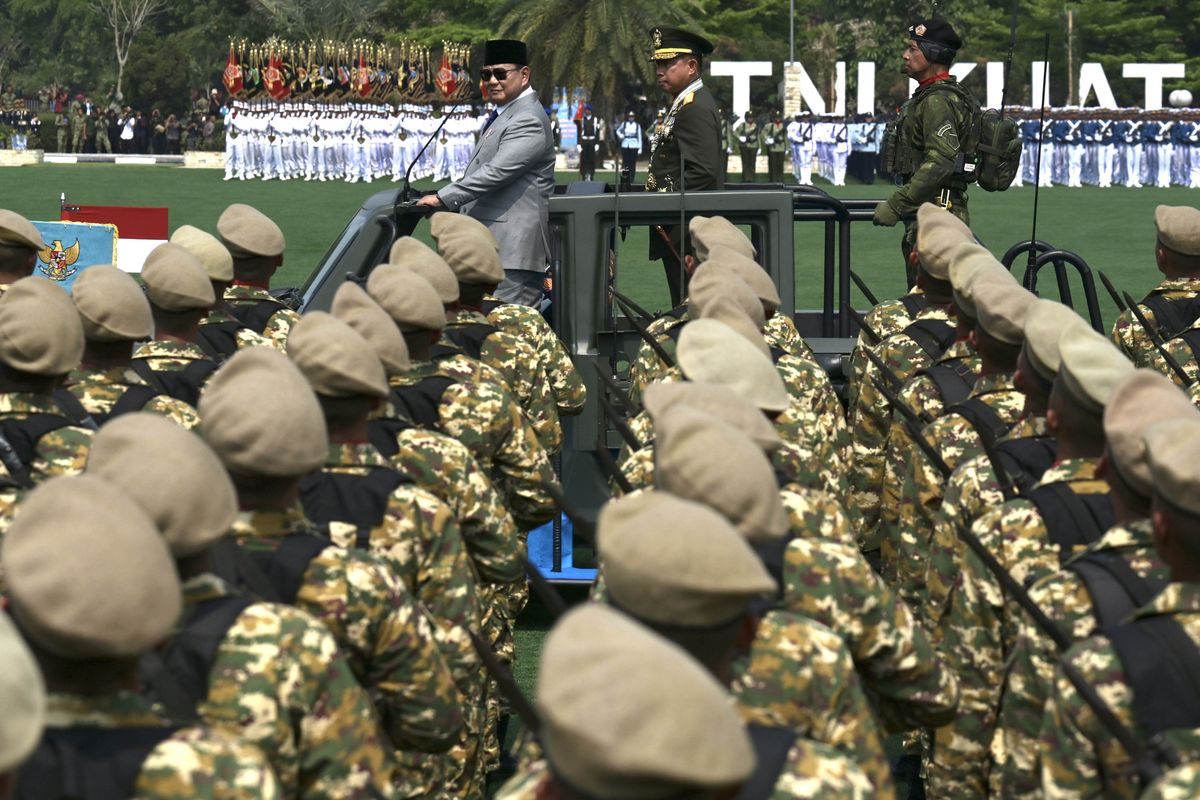
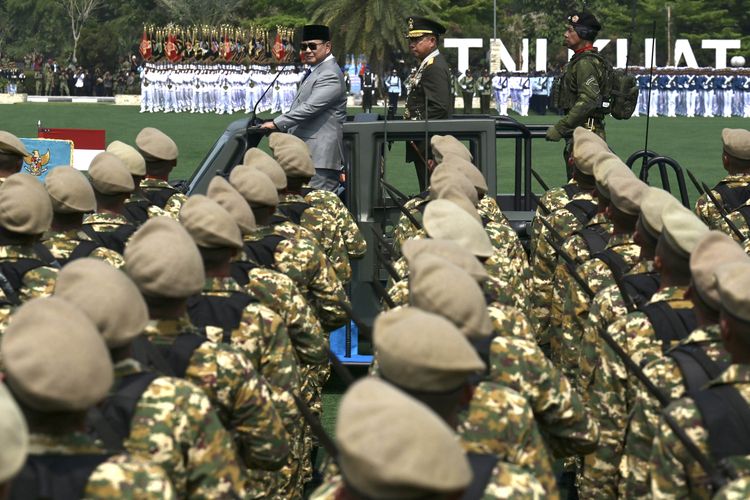
TWO years into President Prabowo Subianto's administration as the head of state and government of the Republic of Indonesia have deeply redefined the Indonesian National Armed Forces (TNI) as a key component in the national defense system.
The management and development of the TNI have sparked considerable public debate.
President Prabowo has faced criticism for allegedly remilitarizing civilian spaces by revising the TNI Law and positioning the TNI as a "panacea" for national development by involving it in various strategic government programs.
Nonetheless, many also commend the achievements of the TNI under President Prabowo’s leadership.
As the state’s military apparatus, the TNI has continuously strengthened its capacity in terms of national defense budgeting, soldier capacity, facilities, and procurement of primary weapon systems, both in quality and quantity, resulting in a significant deterrent effect against adversaries.
In 2025, the defense budget (Ministry of Defense/TNI) increased compared to the previous year, rising from IDR 139.26 trillion in 2024 to IDR 166.2 trillion in 2025—further adjusted to a revised budget cap soaring to IDR 364.1 trillion to expedite the modernization of weapon systems and enhance soldier welfare.
By 2026, the budget allocated for the Ministry of Defense and TNI increased to IDR 187.1 trillion, while the total budget for defense and military as a whole soared to IDR 337.4 trillion within the state budget (APBN).
The Indonesian government remains committed to sustainably enhancing the military strength of the TNI by 2027.
This is reflected in the budget cap set for the Ministry of Defense and TNI of IDR 189 trillion, an increase from previous years.
Although the overall budget for defense and military in the APBN has been declining since 2025, the budget for 2027 remains relatively stable at around IDR 329.5 trillion, focusing on weapon systems, infrastructure and industry, reserve components, cybersecurity, and operational readiness.
The empowerment of military strength has been comprehensive across all branches, ensuring no branch feels neglected.
To strengthen air defense systems, Indonesia has acquired 42 units of French-made Dassault Rafale fighter jets.
So far, 6 units have been delivered for immediate operation by the Indonesian Air Force, specifically in Squadron 12 at Roesmin Nurjadin Air Base in Pekanbaru.
These Rafale aircraft, equipped with long-range Meteor missiles and precision Hammer munitions, are projected to bolster the TNI AU's capacity to secure the national airspace against potential threats to sovereignty and territorial integrity, especially amidst the current uncertain geopolitical climate.
As part of enhancing maritime defense capabilities, particularly as a maritime nation, the government received a donation from Italy: the aircraft carrier ITS Giuseppe Garibaldi, which arrived at Tanjung Priok on September 18, 2026.
This aircraft carrier, which will soon be renamed KRI Sriwijaya-100, is projected to enhance the capabilities of the TNI AL, especially in conducting Military Operations Other Than War (MOOTW) such as boosting Intelligence, Surveillance, and Reconnaissance (ISR) in archipelagic areas, logistics distribution, and disaster management, especially relevant given the recent surge of disasters in Indonesia.
The strengthening and empowerment of military capacity are conducted not only for the Ministry of Defense and TNI as the main stakeholders but also encompass the entire defense ecosystem.
One key area is the national strategic industry. It has been President Prabowo's policy direction that Indonesia must strive for national independence in producing weapon systems.