

PKB Proposes Allowing PPPK Over 35 to Participate in CPNS Selection
-
News
-
2 minutes ago
This article was translated by AI. Read the original article on Kompas.com. See Original
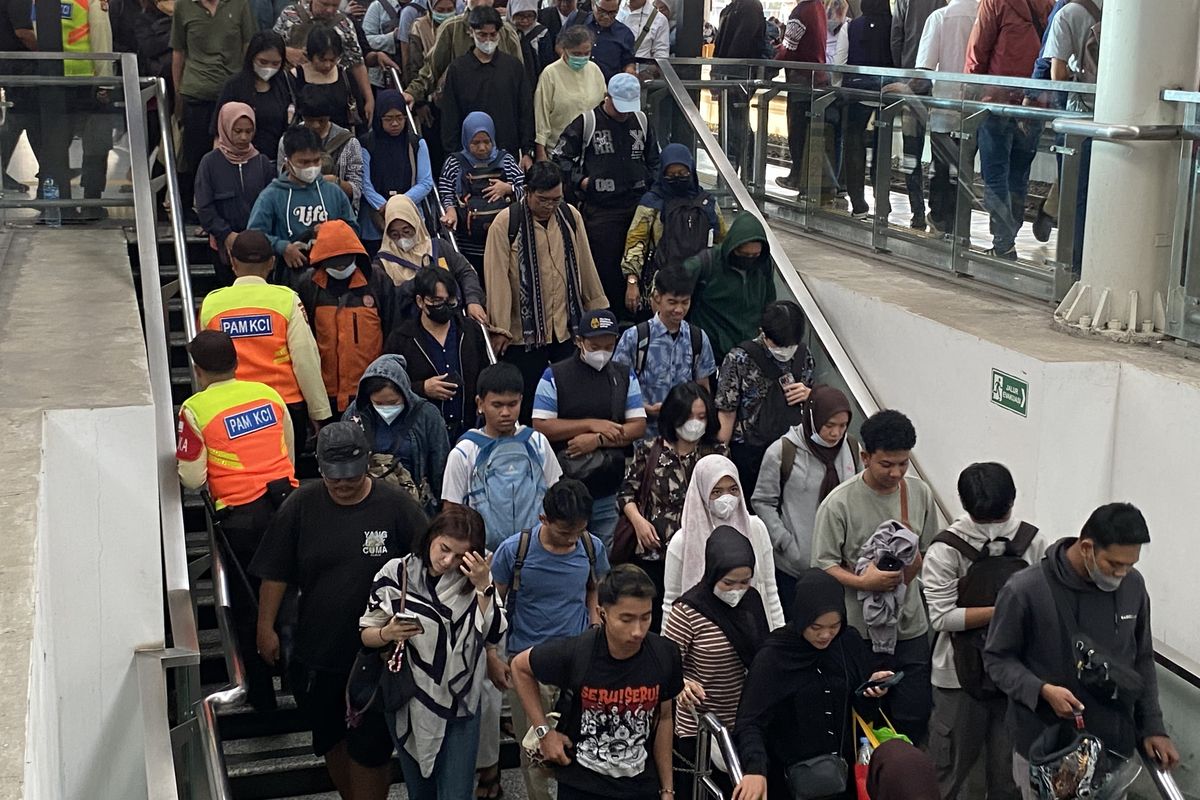
JAKARTA, KOMPAS.com - Being part of the middle class in a big city does not always mean having ample financial room.
Income that relatively places someone within the upper middle economic group still must contend with expenses for housing, food, transportation, children's education, and family needs.
After all these needs are paid, the space for saving and building assets is often the most vulnerable to shrinkage.
This is the reality experienced by Naufal Pratama (28), an administrative worker at a private company in East Jakarta.
With an income of around Rp 6.5 million per month, Naufal can still meet everyday needs.
However, he does not feel he has much room to anticipate major expenses or emergencies.
Every month, Rp 1.7 million of his income goes to rent. Around Rp 1.5 million is used for food, Rp 700,000-Rp 900,000 for transportation, and Rp 300,000 for internet and phone credit.
Naufal also regularly sends Rp 500,000 to his parents. After all needs are covered, he calculates what remains for personal expenses and savings. The amount varies.
"Some months I can save Rp 1 million, some months only Rp 300,000, and sometimes I can’t save at all," Naufal said when contacted by Kompas.com via WhatsApp on Saturday (19/9/2026).
For Naufal, the problem is not lacking income. He is still employed and able to cover basic needs.
But his income has yet to provide enough room to build a financial reserve.
If he suddenly lost his job, he estimates he could only last two to three months, and only with strict economizing.
"I feel like my position isn’t actually secure yet. My income is enough to live normally, but not enough to feel I have a substantial reserve," he said.
This dilemma experienced by Naufal is also felt by other urban workers.
They are not in a state of lacking basic needs, yet at the same time do not have enough financial flexibility to be considered well-off.
Expenses such as housing, transportation, children’s education, health, family needs, and unexpected costs must be covered from monthly income.
Meanwhile, Febiola Putri (34), a customer service representative at an e-commerce company in West Jakarta, must divide her income for household and child expenses.
Febiola earns about Rp 5.8 million per month. Her husband works in the informal sector with an irregular income.
When business is good, her husband’s income can reach Rp 3 million-Rp 4 million, but some months it is just above Rp 2 million.
The family rents a house for Rp 1.8 million per month. Then there are school fees and child expenses of around Rp 700,000 to Rp 1 million, household shopping around Rp 1.5 million, as well as electricity, water, internet, and other needs exceeding Rp 700,000.
These expenses exclude transportation and emergency needs.
"What feels most burdensome aren’t the big expenses—it’s the small ones. School fees, buying milk, medicine, fares, fuel, gas," Febiola said when contacted via WhatsApp.
Under normal conditions, she can only set aside about Rp 500,000. Those savings can quickly be used when the child falls ill or there is a family need.
Her biggest worry is not today’s spending, but her child’s future needs.
"Even at five years old, there are already many needs. I often think about how it will be when the schooling gets more expensive. My husband and I don’t have many assets. So we rely on monthly income," she said.
Febiola feels her family is in a precarious position. On one hand, they are still working, able to pay rent, send their child to school, and meet daily needs.